

INDUSTRY & FINANCE : Dangote Cement Revives London Listing Ambition to Accelerate International Expansion
(LVDE) – Nigerian conglomerate Dangote Cement, led by billionaire Aliko Dangote, announced in 2026 the revival of its plan for a dual listing on the London Stock Exchange. The move, considered from Abidjan and Lagos, comes a decade after a first unsuccessful attempt and aims to strengthen access to international capital markets to support the group’s expansion in cement, oil refining and fertilizers.
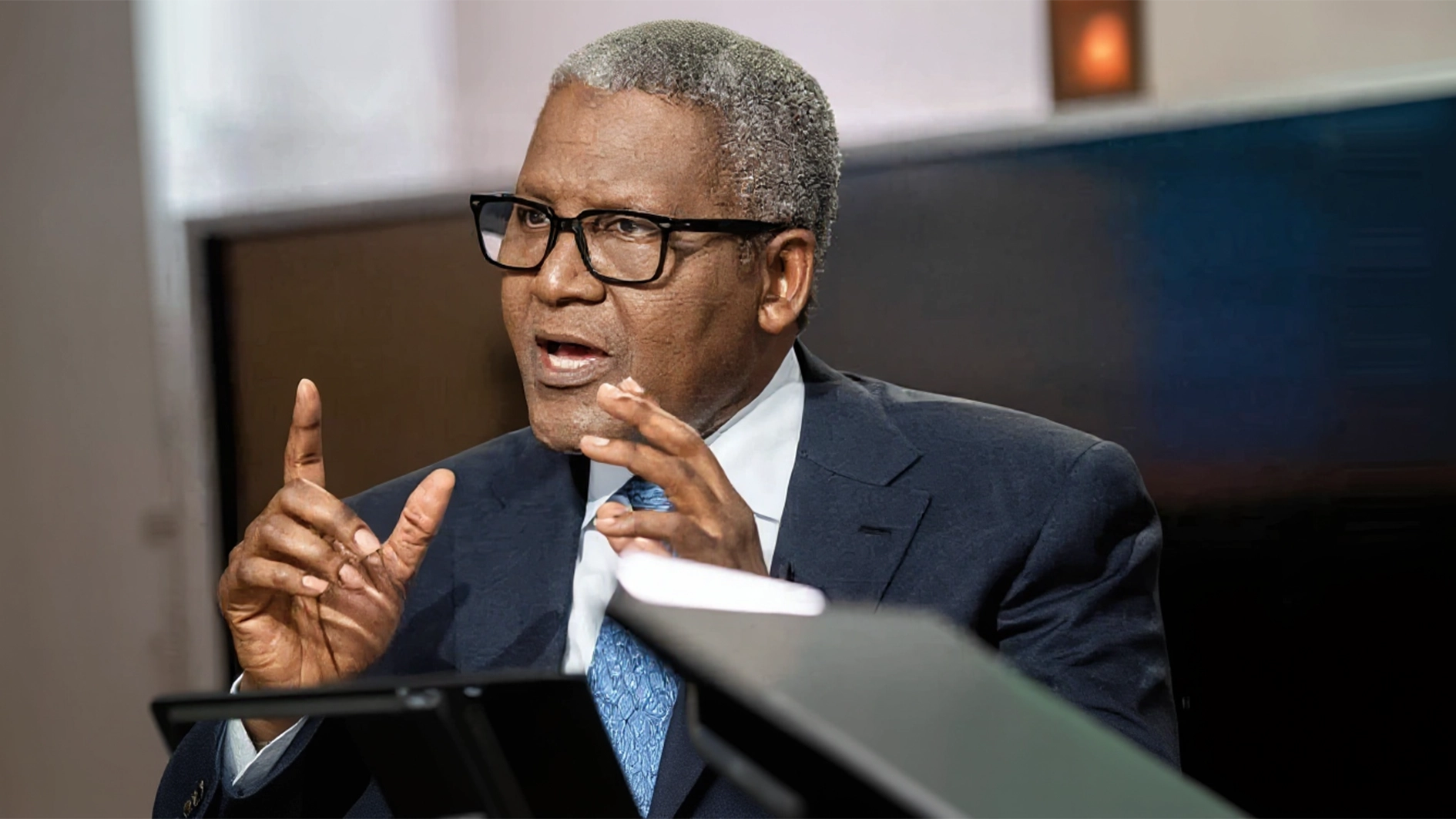
Aliko Dangote, Président du Groupe Dangote.
In financial circles in Lagos and London, the announcement is already being seen as a strategic signal. Ten years after its initial failed attempt, Dangote Cement is reviving its dual listing project on the London market, a step that forms part of a broader strategy to internationalize the industrial empire of Nigerian billionaire Aliko Dangote.
This renewed strategy comes as the group simultaneously strengthens its position across several key sectors of the African economy. As the continent’s leading cement producer with an estimated production capacity of over 52 million tonnes per year according to internal company data and Fitch Ratings market analysis, Dangote Cement continues to expand its industrial footprint across more than ten African countries. The group is also making major investments in oil refining through the Lekki mega-refinery, as well as in large-scale fertilizer production aimed at supporting regional food security.
The prospect of a London listing is primarily intended to diversify funding sources and increase the group’s international visibility. A presence on the London Stock Exchange would enable Dangote Cement to attract more institutional investors and improve the liquidity of its shares, at a time when competition is intensifying in Africa’s construction materials markets. According to several financial analysts, African companies are increasingly seeking access to global capital markets to support their continental expansion ambitions.
The group is relying on strong financial performance to justify this renewed international push. Dangote Cement has recorded annual revenues of several billion dollars in recent years, driven by strong infrastructure demand across the African continent. Rapid population growth, urbanization and public investment in roads, housing and energy infrastructure continue to drive cement consumption in sub-Saharan Africa, where demand could exceed 400 million tonnes per year by the end of the decade, according to the African Development Bank.
Beyond cement, the Dangote Group is pursuing a vertical integration strategy positioning it as a global industrial player. The commissioning of the Lekki refinery, with a capacity to process up to 650,000 barrels of oil per day according to industry estimates, along with large-scale fertilizer projects, further strengthens its role in the continent’s energy and agricultural value chains. This diversification is seen as a key lever to reduce Africa’s dependence on imports.
Against this backdrop, the revival of the London listing appears as a logical step in the group’s transformation into a global industrial conglomerate. For financial markets, the operation would also serve as an important test of the attractiveness of major African companies on international stock exchanges, as several continental groups seek to establish themselves globally.
It now remains to be seen whether this renewed attempt will allow Dangote Cement to take a decisive step forward in its global expansion strategy or whether regulatory and financial constraints will once again delay the ambition.

 Esther Grâce
 La voix des entreprises