

SCANNING OF GOODS : Prime Minister rules in favor of maintaining SGS contract at the Port of Douala

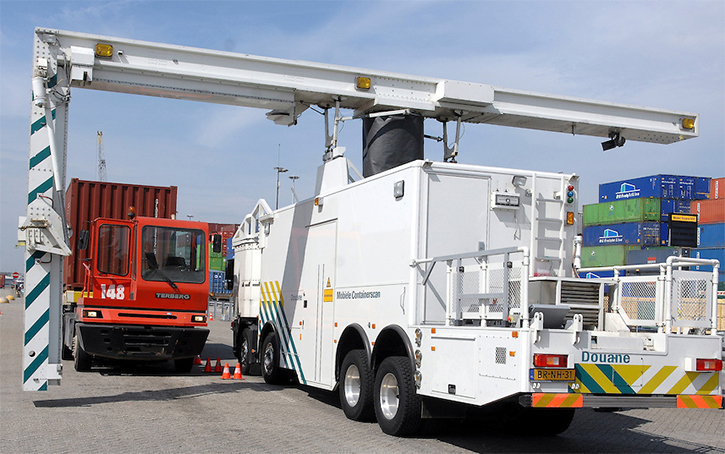
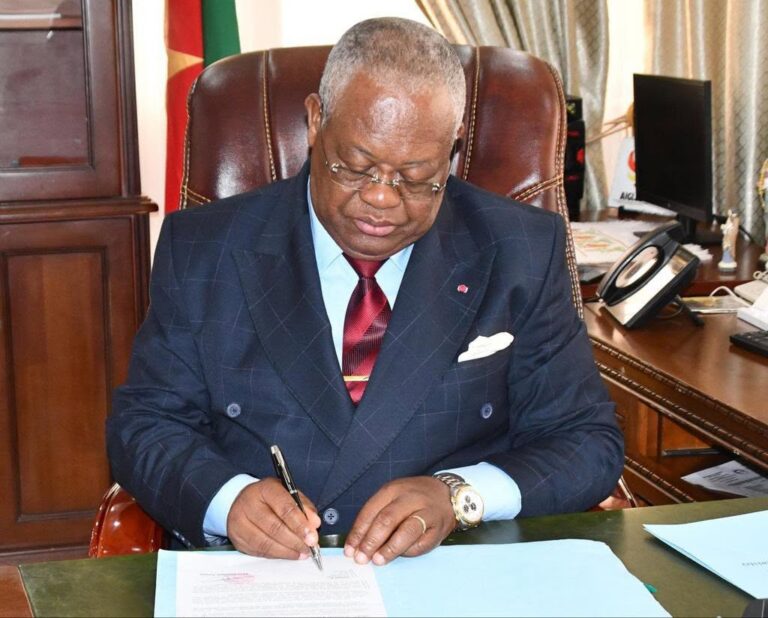
(LVDE) — Following a crisis meeting convened in Yaoundé, Prime Minister Joseph Dion Ngute has settled the dispute involving several authorities over the goods scanning contract at the Port Authority of Douala-Bonabéri, confirming the continuation of the agreement binding the State to Société Générale de Surveillance (SGS) and bringing to an end an institutional standoff that had stalled this strategic activity.
In a tense atmosphere marked by conflicting legal and institutional interpretations, the issue of scanning containers and other goods at the Port of Douala reached a decisive turning point in late January 2026. The question of whether the ongoing contract with the Swiss firm Société Générale de Surveillance (SGS) should continue or be transferred to a new operator had drawn the attention of the country’s highest authorities.
The dispute directly involved the Director General of the Port Authority of Douala, Cyrus Ngo’o, who, in a letter dated 9 December 2025, announced the replacement of SGS by Transatlantic D SA as from 1 January 2026, with an expanded scope of scanning operations covering all cargo flows. This initiative was presented as part of a drive to modernize physical and non-intrusive cargo inspection, but it failed to gain broad consensus.
The government’s response was swift. The Minister of Finance, Louis Paul Motazé, addressed a letter dated 29 December 2025 to the management of the Port Authority, recalling that the Scanner Inspection Contract (CIS) signed on 2 March 2015 with SGS was still valid and that the provisions of this public-private partnership agreement had to be respected, notably to safeguard customs revenue.
This position intensified the debate, exposing a degree of institutional discord when alleged instructions from the Presidency of the Republic, conveyed through its Secretary General, appeared to favor Transatlantic D SA. However, these indications were reportedly overturned during the crisis meeting called by the Head of Government.
On Thursday, 29 January 2026, after two hours of discussions at the Étoile Building in Yaoundé, attended by the ministers concerned—including the Minister of Transport, Jean Ernest Massena Ngalle Bibehe—and representatives of all stakeholders, Prime Minister Joseph Dion Ngute ordered the extension of the SGS contract until 2032. He recalled that only the government has the authority to terminate a contract signed with the State, and that it is not within the mandate of the Port Authority of Douala to unilaterally alter such an agreement.
For economic players and port operators, this decision is expected to restore legal and operational stability after several weeks of uncertainty that had disrupted scanning activities initiated by SGS at the beginning of 2026. The continuation of the contract comes at a time when non-intrusive inspection operations are deemed essential for facilitating customs procedures, securing revenue, and strengthening the traceability of trade flows.
More broadly, the case highlights tensions among different State institutions over the governance of strategic infrastructure and raises questions about the distribution of responsibilities between port authorities, ministerial oversight bodies, and the central executive. At the close of the Yaoundé meeting, it became clear that the government is prioritizing respect for existing contractual frameworks and legal certainty, in order to avoid costly disputes and ensure service continuity at one of the country’s main gateways for imports and exports.
In the days ahead, attention will now turn to the implementation of this directive and the clarification of each actor’s role, at a time when the Port of Douala remains a cornerstone of Cameroon’s economy and regional integration.
Raphael Mforlem


 La voix des entreprises
 Esther Grâce