

BREWING INDUSTRY : Kadji Group targets the Ivorian market after Nigeria

(LVDE) – The Kadji Group is stepping up its West African expansion with plans for a logistics hub in Côte d’Ivoire, set to become a cornerstone of its regional strategy. This move builds on an expansion drive already underway, notably marked by its recent establishment in Nigeria.
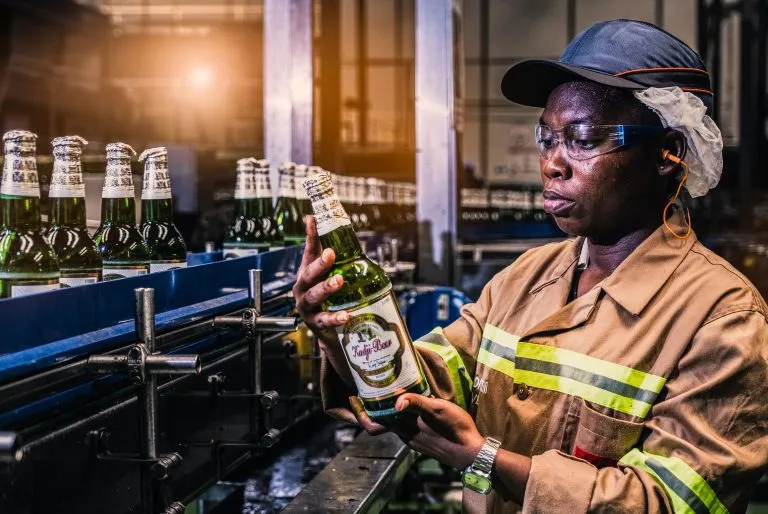
The Kadji Group is entering a new phase in its international development by positioning Côte d’Ivoire as a future anchor point for its operations in West Africa. The planned logistics center aims to structure sub-regional distribution and optimize product delivery to markets within the West African Economic and Monetary Union (WAEMU), which are characterized by sustained growth.
Designed as a strategic platform, the infrastructure is expected to be supplied by production units in Cameroon and Nigeria. It reflects the group’s intention to streamline logistics flows, reduce transport costs, and improve commercial responsiveness in an increasingly competitive market.
This move into Côte d’Ivoire follows the group’s expansion into Nigeria, where its first production facility was inaugurated on March 25, 2026, in Aba, Abia State. Operated by its subsidiary Ultimum Limited, the plant—built at an estimated cost of CFAF 20 billion—positions the Cameroonian brewer in Africa’s most populous market, with over 220 million inhabitants.
With this dual presence taking shape, the Kadji Group is gradually building a regional footprint combining production and logistics, enabling it to serve a consumer base of more than 300 million people.
This expansion strategy also responds to constraints in the domestic market. In Cameroon, the dominance of SABC—strengthened by the acquisition of Guinness Cameroon in 2023 for nearly CFAF 300 billion—limits growth opportunities for challengers. In this context, international expansion appears as a key lever for diversification and growth.
Moreover, the implementation of the African Continental Free Trade Area (AfCFTA) enhances the attractiveness of this strategy. By facilitating trade and reducing tariff barriers, the agreement opens new opportunities for companies capable of establishing an integrated regional presence.
Through cumulative investments estimated at over CFAF 120 billion, the Kadji Group is reaffirming its ambition to become a major player in the brewing industry across Central and West Africa. By leveraging the complementarity between production and logistics, the group aims to capitalize on the continent’s growth dynamics and strengthen its competitiveness against international players.

 Amélie Yandal
 Tressy CHOUENTE
 La voix des entreprises
 Anatole Bidias