BANKING & FINANCE : BGFIBank Group Surpasses CFA 7,400 Billion in Total Assets in 2025

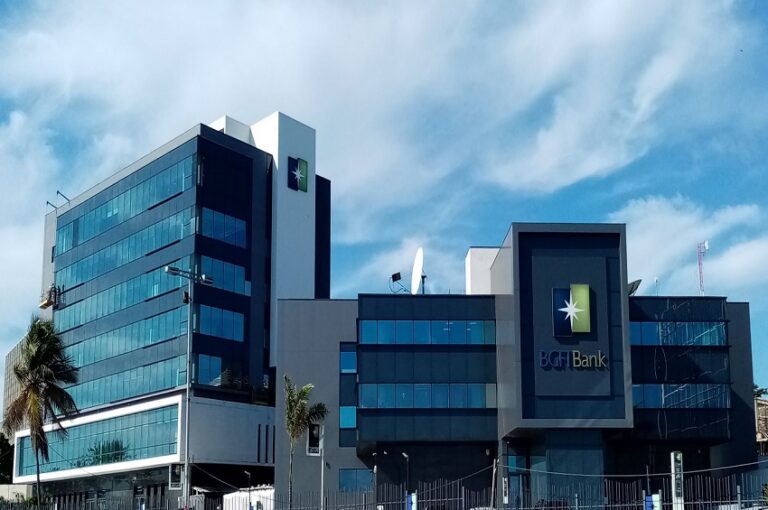
(LVDE) – BGFIBank, a leading player in the banking sector in Central Africa, closed the 2025 financial year with a consolidated balance sheet of CFA 7,428 billion, up 25% from 2024. This record performance, recorded in Cameroon, Gabon, the Republic of Congo, and 11 other countries, reflects sustained growth in customer deposits and financing of the real economy, as well as the operational efficiency of the group.
 Tressy CHOUENTE
In Libreville, Douala, and across all the countries where it operates, BGFIBank celebrated an exceptional 2025 fiscal year. With a consolidated balance sheet totaling CFA 7,428 billion, the group far exceeds previous thresholds, reaching nearly 84% of Cameroon’s 2026 national budget, underscoring its regional economic weight. According to financial analyses by Iavis consulted by EcoMatin, this growth was driven by customer deposits of CFA 4,263 billion (+10%) and loan portfolios of CFA 3,787 billion (+6%), primarily directed towards construction, mining, energy, trade, and agro-industry sectors.
The group’s net banking income reached CFA 414 billion (+26%), supported by a strengthened net interest margin of CFA 293 billion (+44%), reflecting the robustness of its financial intermediation activities. Despite an increase in operating expenses to CFA 242 billion (+19%), the cost-to-income ratio improved by three points to 56%, allowing gross operating income to rise to CFA 190 billion (+33%). After accounting for a total risk cost of CFA 20 billion, the consolidated net profit stood at CFA 133 billion (+9%), while net profit attributable to shareholders rose 17% to CFA 112 billion.
This financial performance follows the closure of the first tranche of BGFI Holding Corporation’s IPO on the BVMAC, which raised CFA 45.3 billion from 7,601 subscribers across 24 countries. This first-of-its-kind transaction for a regional multinational now forms the foundation for the BGFI 2030 strategic plan covering 2026-2030.
Simultaneously, the Board of Directors approved a plan to strengthen the share capital of subsidiaries, extending the recapitalization strategy already implemented in Gabon, Congo, Cameroon, Côte d’Ivoire, and Europe. This initiative aims to consolidate prudential ratios, support strategic business units, and facilitate expansion into new markets.
For BGFIBank, this combination of financial performance, capital market initiatives, and recapitalization demonstrates a clear commitment to reinforcing its leading role in financing the real economy while consolidating its competitiveness against major regional and international institutions.
À propos de l'auteur



 Raphael Mforlem