CEMAC REGION : BEAC keeps its policy rate at 4.75% despite a slowdown in growth expected at 2.9% in 2026

(LVDE) – In Yaoundé, the Bank of Central African States has opted for monetary caution. Despite an anticipated slowdown in economic activity in 2026, the institution is choosing to safeguard financial stability across the sub-region, in a context marked by still-fragile balances and persistent external uncertainties.
 Tressy CHOUENTE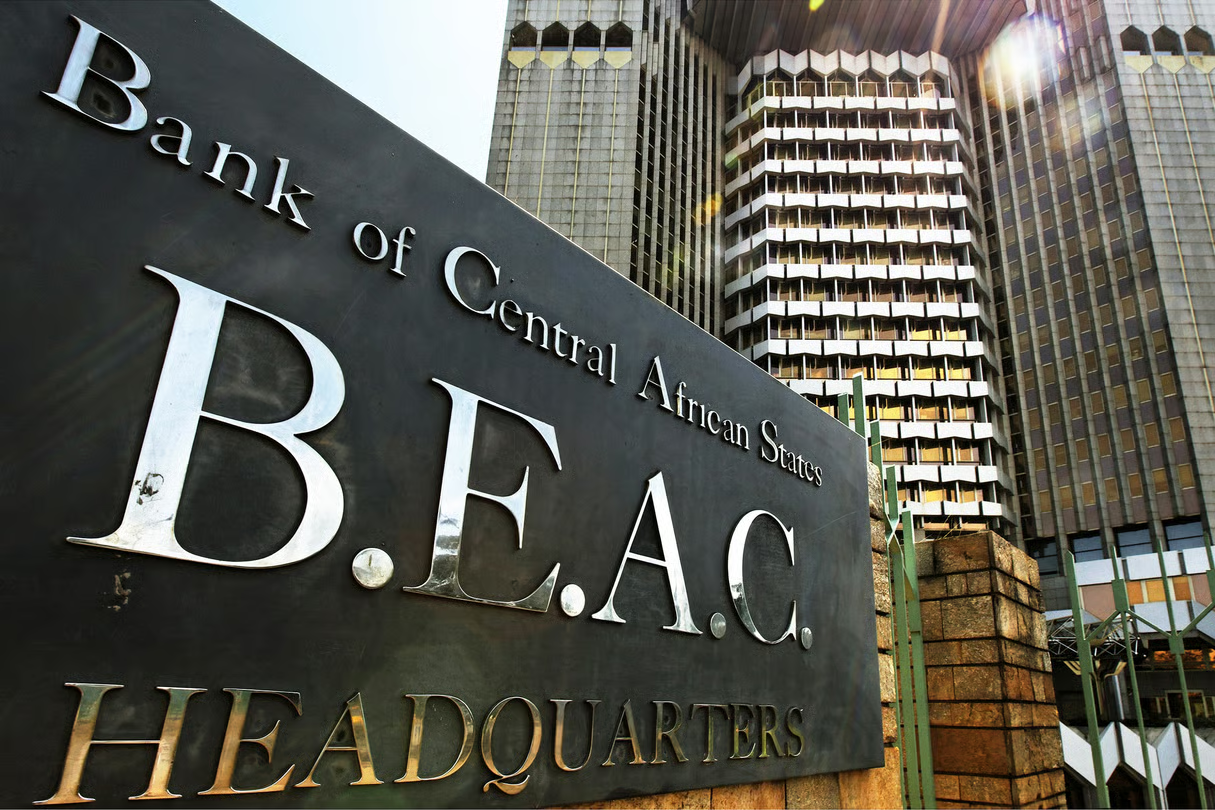
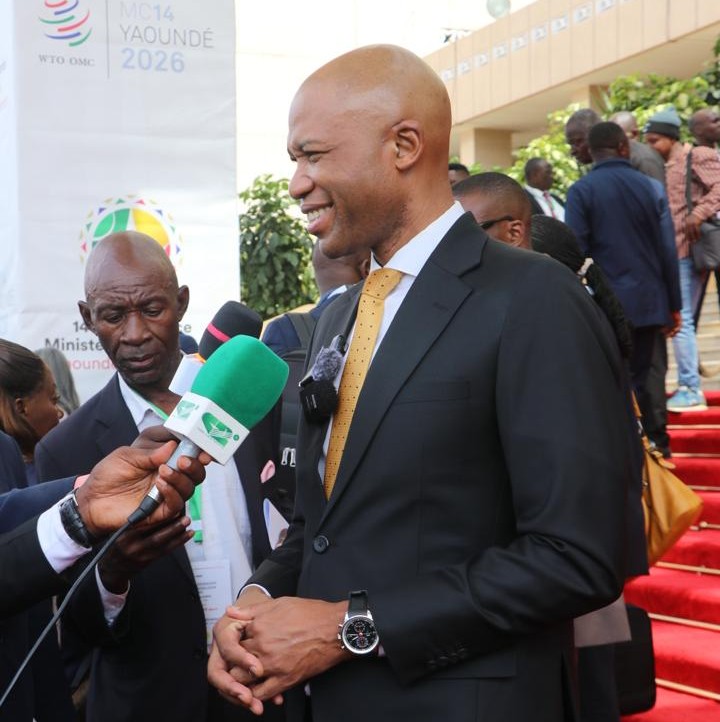
Meeting on April 2, 2026, in the Cameroonian capital, the Monetary Policy Committee of the Bank of Central African States (BEAC) delivered its verdict: key policy rates remain unchanged. Under the leadership of Governor Yvon Sana Bangui, monetary authorities decided to keep the policy rate at 4.75%, thereby confirming a cautious stance in response to economic developments within the CEMAC zone.
In detail, the marginal lending facility rate remains set at 6.25%, while the deposit facility rate stands at 0.00%. Reserve requirement ratios have also been maintained at 7.00% for demand deposits and 4.50% for term deposits. This stability in monetary instruments reflects the central bank’s determination to contain risks while supporting economic activity.
Macroeconomic prospects for the sub-region indeed point to a slight slowdown. After estimated growth of 3.5% in 2025, CEMAC’s gross domestic product is expected to expand by 2.9% in 2026. This deceleration is mainly driven by volatility in international markets and structural constraints affecting commodity-dependent economies.
On the price front, the situation remains broadly under control. Inflation is projected at an average of 2.3% in 2026, compared to 2.1% a year earlier, staying below the community threshold of 3%. This relative stability reinforces BEAC’s strategy of consolidating gains in price control.
Public finances, meanwhile, are expected to improve. The overall budget deficit is projected to narrow significantly, from 4.8% of GDP in 2025 to 2.2% in 2026. However, the current account deficit, including grants, is expected to widen to 5.2% of GDP, compared to 2.9% the previous year, highlighting persistent external imbalances.
In the background, monetary indicators point to a strengthening of fundamentals. Money supply is expected to grow by 11.1% by the end of 2026, supported by robust banking liquidity. The external coverage ratio of the currency is projected to reach 68%, while foreign exchange reserves are expected to cover 4.52 months of imports of goods and services, up from 4.22 months in 2025.
In this context, BEAC is pursuing a measured course of action, aiming to preserve macroeconomic stability while allowing room for adjustment by member states. Between monetary discipline and support for economic activity, the institution will need to continue navigating an uncertain regional and international environment.
À propos de l'auteur






 La voix des entreprises
 Raphael Mforlem

 Esther Grâce