MARITIME FREIGHT : The Port Autonome de Kribi Surpasses the 12 Million Ton Annual Cargo Handling Mark

 La voix des entreprises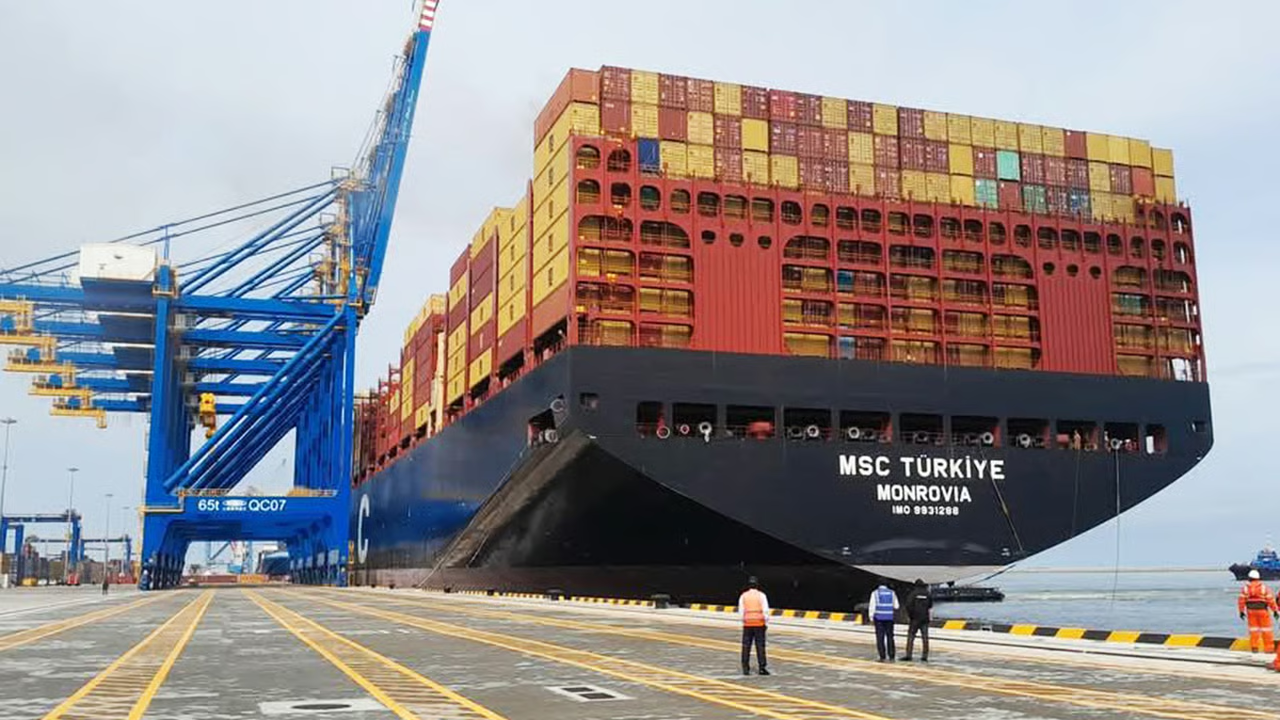
(LVDE) — Five years after the effective launch of the Kribi Multipurpose Terminal, the Port Autonome de Kribi is strengthening its position in the Gulf of Guinea. With record-breaking handling operations, diversified cargo flows and expanded infrastructure, the platform is posting steadily improving performance and aims to become a leading logistics hub in Central Africa.
On Cameroon’s Atlantic coastline, the Port Autonome de Kribi continues its upward trajectory. Through the Kribi Multipurpose Terminal (KMT), operated under a 25-year concession by International Container Terminal Services Inc. (ICTSI), the port has completed its first five-year operational cycle with consistently rising performance indicators.
Since operations officially began in October 2020, the terminal has gradually established itself as a strategic link in sub-regional maritime freight. Consolidated figures show that more than 12 million tons of cargo had been handled cumulatively by the end of 2024. The year 2025 marks a new milestone, with 1,275,384 tons processed compared to 959,425 tons the previous year, representing a 33% increase.
Growth has been largely driven by inbound cargo, which reached 1,100,338 tons in 2025, up 86.28% year-on-year. Clinker remains the backbone of traffic, accounting for 862,302 tons, or 67.6% of total volumes. In October 2025, a symbolic milestone was achieved with 22,205 tons unloaded within 24 hours, supported by an average handling rate of 700 tons per hour and the use of environmentally friendly equipment designed to reduce dust emissions.
At the same time, the cargo mix is evolving. Gypsum recorded the most significant growth, surging by 217%, from 21,821 tons in 2024 to 69,260 tons in 2025. Wheat and petroleum coke also increased by 24% and 29% respectively. New strategic segments have emerged, including slag with 62,400 tons, as well as cargo linked to the oil and gas industry. Log exports totaled 171,866 tons, confirming the stability of outbound traffic.
This expansion is underpinned by the Phase 2 development project. The quay length has been extended from 265 meters to 615 meters, while storage yards have expanded from 10 to 33 hectares. The terminal can now accommodate two to three 80,000-ton vessels simultaneously, with a natural draft of 16 meters suitable for Post-Panamax ships. A dedicated clinker warehouse and new-generation handling equipment further enhance operational capacity. The launch of iron ore exports also opens new prospects for Cameroon’s mining sector.
Beyond industrial performance, the operator has incorporated a social component into its growth strategy, notably through the renovation of a nearby school and initiatives focused on education, healthcare, training and local development. This approach supports Kribi’s transformation into a structuring logistics hub for Central Africa.
Esther Grace
À propos de l'auteur



 Tressy CHOUENTE
 Raphael Mforlem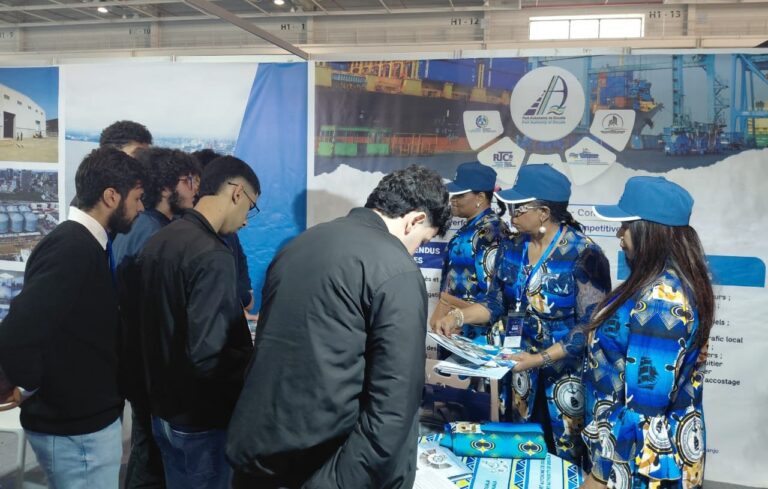

 Esther Grâce