YAOUNDÉ–DOUALA ROAD : Government Announces Initial Upgrading Measures
 La voix des entreprises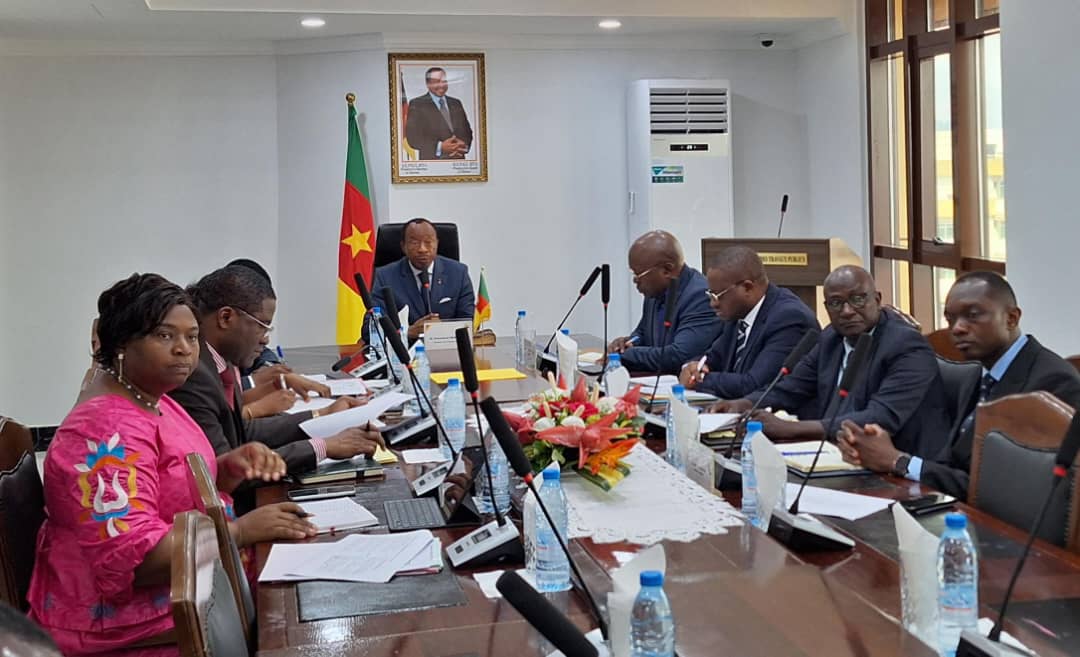
(LVDE) — In response to the advanced deterioration of the strategic Yaoundé–Douala corridor, the Government is launching urgent measures to improve traffic flow and secure the roadway. On December 30, 2025, the Minister of Public Works, Emmanuel Nganou Djoumessi, chaired a decisive consultation aimed at preparing the start of operations.
The road connecting Cameroon’s political capital to its economic hub remains a critical asset for national transport and economic activity. Observing the significant wear and tear along this vital artery, the Government has opted for rapid intervention to prevent further degradation. During the strategic meeting, Minister Nganou Djoumessi outlined the steps to be taken before mobilizing funding from technical and financial partners. The immediate goal is to initiate improvement works financed internally to stabilize the pavement and facilitate circulation, pending a broader rehabilitation program.
It was clarified that the measures will not involve a full reconstruction, but rather pragmatic, cost-effective upgrades. Planned interventions will target the most deteriorated sections, particularly at Boumnyebel and Mbankomo, where a two-layer treatment is recommended. The program also includes strengthening the road base, recharging shoulders, and upgrading road signage. Work will proceed gradually, with financial assessments conducted per kilometer to optimize the use of available resources.
The consultant, working in partnership with the French Development Agency (AFD), proposed solutions designed to balance comfort, safety, and cost-efficiency. Their recommendations align with the technical teams of the Ministry of Public Works, who are developing a coherent route plan spanning the entire corridor from Kilometer Zero in Yaoundé to the Dibamba Bridge. Among the Minister’s directives are the installation of reinforced concrete guardrails with lighting, revisions to the pavement type, and detailed price breakdowns for each segment. Work is expected to commence within thirty days of contract award.
This initiative forms part of the broader Douala–Bangui corridor project, which has attracted the interest of several international partners, including the World Bank, the Islamic Development Bank, the European Union, and the French Development Agency. Their support could eventually enable a full and sustainable rehabilitation of the route, strengthening the strategic role of the Yaoundé–Douala road for both national and regional economic development.
Through these actions, the Government seeks to demonstrate its commitment to ensuring user safety and comfort while progressively modernizing a corridor that remains vital to Cameroon’s infrastructure network.
Raphael Mforlem
À propos de l'auteur




 Raphael Mforlem