

CAMEROON : Cotton Hit by Climate, Exports Down 25%

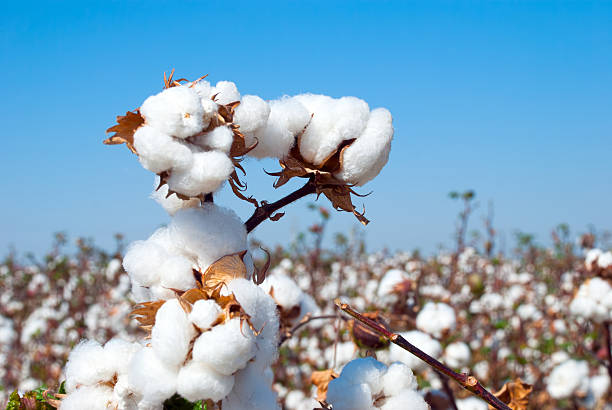
Branch of ripe cotton on the cotton field, Uzbekistan
(LVDE) — Weakened by persistent climate shocks, Cameroon’s cotton sector is experiencing a sharp decline in export performance. As of the end of September 2025, external sales had dropped by 25%, resulting in an estimated contraction of CFA 37.2 billion. The downturn marks a reversal after the upswing recorded in 2024 and rekindles concerns about the sector’s resilience.
In the plains of the North and Far North regions, the historic heartland of Cameroon’s cotton production, the 2025 harvest bears the imprint of irregular rainfall and unusual heatwaves. By the end of September, cotton exports had fallen by 25% compared to the same period in 2024, according to consolidated data from foreign trade services and the Société de Développement du Coton (Sodecoton). In value terms, the decline amounts to CFA 37.2 billion over nine months.
This underperformance follows a 2024 financial year marked by a notable recovery. Supported by more favorable weather conditions and a rebound in international demand, shipments had increased, providing relief to producers and public finances. However, 2025 has brought a sharp reversal. Prolonged drought episodes, combined with late rainfall, have affected yields in several production basins.
According to sector estimates, national output — which hovered between 390,000 and 400,000 tons during the best recent seasons — has recorded a significant decline. Per-hectare yields were penalized by water stress, while some plots suffered losses due to pest proliferation encouraged by climatic variations.
Cotton remains one of the country’s leading agricultural export products, alongside cocoa, coffee, and timber. The sector directly or indirectly supports nearly two million people in the northern regions, according to Sodecoton data. The decline in foreign sales therefore affects both farmers’ incomes and foreign exchange earnings, at a time when the trade balance remains under pressure.
International markets have not provided a particularly supportive environment either. Although global cotton prices have experienced moderate fluctuations, they remain sensitive to broader economic uncertainties and increasing competition from major producers such as India, the United States, and Brazil. For Cameroon, where most of the fiber is destined for export, this reliance on external markets amplifies the impact of domestic climate shocks.
In response, authorities and sector leaders are emphasizing the strengthening of adaptation mechanisms. Programs to introduce more drought-resistant seed varieties, improve irrigation, and provide technical support to producers are among the measures being explored. Modernizing collection and ginning infrastructure is also presented as a lever to enhance competitiveness.
The 25% drop in exports as of September 2025 underscores the structural vulnerability of an agricultural sector heavily dependent on climate conditions. After the rebound of 2024, the cotton industry now faces the urgent need to accelerate its transformation in order to preserve its strategic role in Cameroon’s economy and secure the livelihoods of thousands of rural households.
Raphael Mforlem


 Esther Grâce
 La voix des entreprises