

ELECTRONIC COMMUNICATIONS TRANSPORT : Camtel Generates Nearly CFA 34 Billion in Revenue in 2024


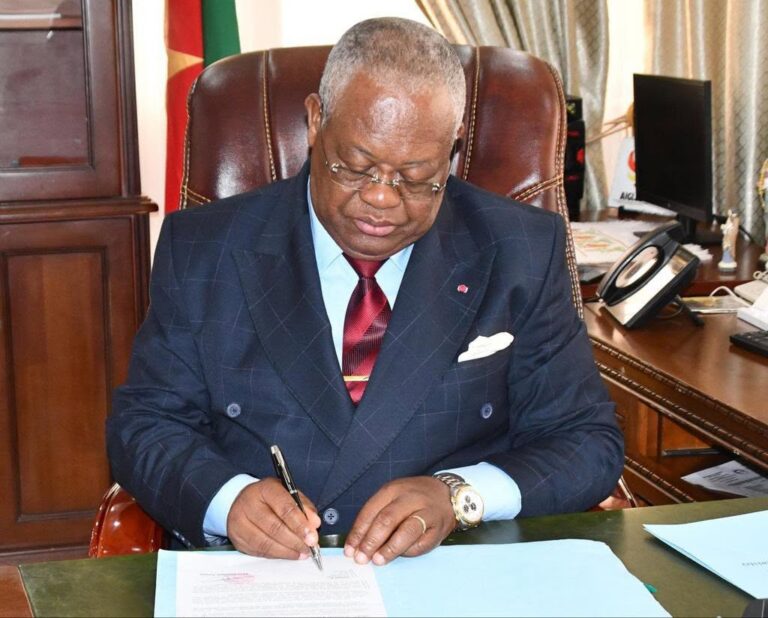
Judith Yah Sunday, DG Camtel
(LVDE) – The ART’s annual observatory reveals that Camtel generated CFA 33.717 billion in 2024 from its electronic communications transport activities. Although up by 17.15% compared to the previous year, the public operator is struggling to return to its 2022 performance level and has not yet fully capitalized on its network, which is reputed to be one of the most robust in Central Africa.
In 2024, Camtel, Cameroon’s public telecommunications operator, recorded revenues of CFA 33.717 billion in the electronic communications transport segment. According to the latest report by the Telecommunications Regulatory Agency (ART), this performance—marked by a 17.15% increase compared to 2023—reflects a significant improvement in the company’s operations. However, these results remain below the CFA 36.5 billion achieved in 2022, a year in which demand for data transmission surged sharply.
An analysis of the results shows a relatively stable situation, although some indicators point to stagnation in network development, notably due to the lack of updated data provided by Camtel since 2021. The relative upturn observed in 2024 can be attributed to several factors, including growing connectivity needs from mobile network operators, strong demand from Internet service providers, and the resumption of network maintenance operations.
The report also highlights the scale and importance of Camtel’s network. With nearly 12,000 kilometers of fiber-optic cables and more than 500 kilometers of metropolitan loops, the infrastructure covers eight of the country’s main regional capitals and extends across all ten regions. This allows Camtel to connect more than fifty divisions and 209 subdivisions, while also establishing direct links with neighboring countries such as Gabon, Nigeria, Equatorial Guinea, Chad, and the Central African Republic.
From an international standpoint, landing stations in Kribi, Limbe, and Douala ensure connectivity to major submarine cables such as SAT3, WACS, NCSCS, and SAIL. Through rights to nearly 50,000 kilometers of cable, Camtel plays a key role in transporting intercontinental voice and data traffic for operators across the sub-region.
Despite this impressive infrastructure, Camtel’s commercial performance remains below its potential. In spite of its near-monopolistic position in transport infrastructure, the operator’s financial results remain insufficient, largely due to persistent operational challenges and the incomplete utilization of available capacity. Although revenues have increased, they are still far from initial budget projections, highlighting the need to optimize resources and network usage in order to better meet rapidly growing bandwidth demand.
In summary, while Camtel is showing positive signs of growth, a crucial challenge remains in consolidating its market position. Continuous improvements in network performance and operational efficiency will be essential to maximize its potential and meet the rising expectations of Cameroon’s telecommunications sector.
Raphael Mforlem

 La voix des entreprises
 Esther Grâce