

ROAD INFRASTRUCTURE : MINTP Bets on Continuing Ongoing Projects and Expanding the Road Network in 2026

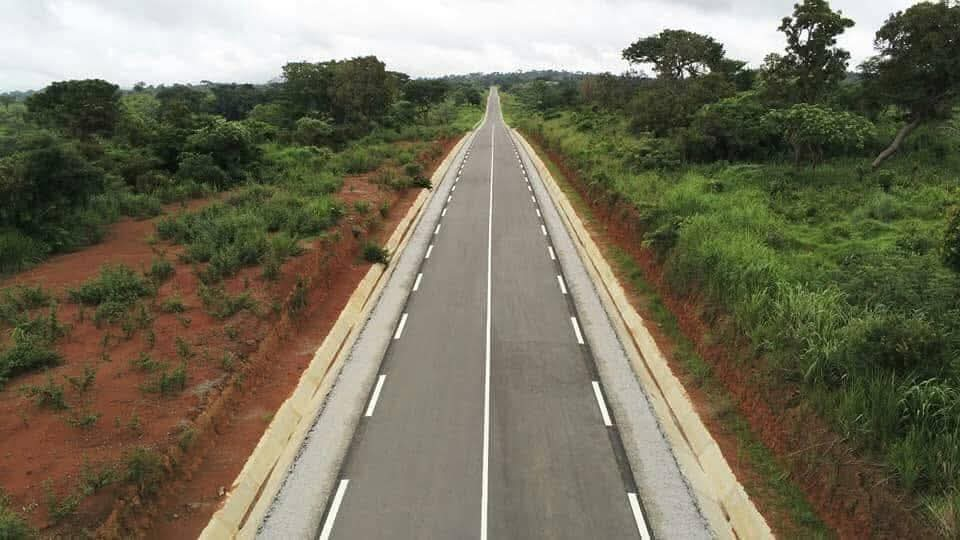
(LVDE) – With an allocation of nearly XAF 652 billion, the Ministry of Public Works is launching an ambitious 2026 programme focused on completing major projects, modernizing infrastructure, and strengthening the maintenance of the national road network. A roadmap that follows a 2025 marked both by budget constraints and by significant progress on several structuring corridors.
In the corridors of the Ministry of Public Works, the atmosphere is studious. For 2026, MINTP is relying on a budget of XAF 651.952 billion to maintain the pace of construction works underway across the country. Of this amount, XAF 539.74 billion is earmarked for investment, while XAF 112.212 billion is allocated to operating expenditures. The financing combines resources from the Road Fund and commitments from Public-Private Partnerships, which have become essential given the scale of the projects.
Although 2025 was hampered by financial pressures and payment arrears, it nonetheless allowed for significant achievements. More than 227 km of roads were delivered, along with several engineering structures now fully operational. In addition, approximately 3,350 km of roads were rehabilitated or maintained: 1,859 km under rehabilitation or intensive maintenance, 717 km under routine maintenance, and 767 km of earth roads upgraded. These results were achieved despite a challenging security environment and budget execution delays on projects funded with domestic resources.
In 2026, the ministry is focusing on the most strategic projects. The Yaoundé–Douala Highway (Phase 2), the Ring Road, the Bogo–Pouss and Kumba–Mamfe corridors, Yaoundé’s Northern Bypass, and the reconstruction of the Tchakamari–Kousseri section are among the top priorities. In the North, where mobility remains a strategic concern, these interventions aim to improve accessibility and secure economic exchanges. Major economic corridors — Ngaoundéré–Garoua, Yaoundé–Douala, Ebolowa–Akom II–Kribi — will also benefit from reinforced works, supported by international lenders to ensure continuity of financing.
MINTP is also betting on technological modernization. The Nkankanzock weighing station, currently being automated, is expected to enable stricter axle-load control. The objective is clear: protect road assets, limit premature deterioration, and optimize maintenance costs.
Forecasts for 2026 reflect the scale of the national effort: 475.96 km of roads to be paved, 2,698.47 linear metres of engineering structures to be built, 852.15 km of paved roads to be rehabilitated, and more than 2,000 km of roads to be maintained — including 778.24 km of paved roads and 1,270 km of earth roads. Major projects such as the Batouri–Ngoura II and Oveng–Gabon Border roads, as well as the second Benue River bridge in Garoua, are also expected to be launched. Technical studies are planned to anticipate future interventions on strategic corridors.
Through this extensive programme, the government reaffirms its commitment to ensuring mobility, strengthening regional connectivity, and sustainably supporting the country’s socio-economic development. For MINTP, 2026 is shaping up to be a pivotal year in which execution performance will need to meet the expectations of millions of users and economic stakeholders.
Esther Grace

 La voix des entreprises
 Esther Grâce