

PUBLIC AND PRIVATE ENTERPRISES : Cameroon reduces subsidies by XAF 9.4 billion due to increasing economic constraints

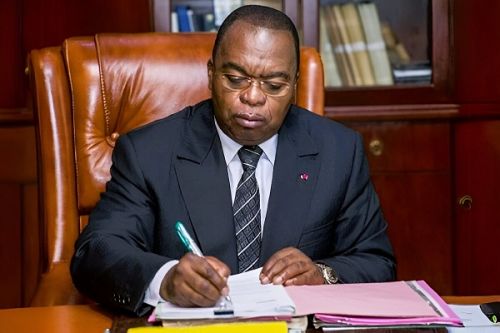
Louis Paul Motaze, Cameroon’s Minister of Finance
(LVDE) – According to the latest data published by the Chamber of Accounts, statistics reveal a decrease in subsidies granted to companies in Cameroon, with a significant 20% drop for public enterprises and a 30% decline for private enterprises in 2024. This budget adjustment reflects a shift in the country’s financial priorities in response to increasing economic pressures.
The Cameroonian government recently announced a substantial reduction in subsidies granted to public and private enterprises for the year 2024. According to the latest figures released by the Chamber of Accounts, allocations to these entities are falling sharply, illustrating a refocusing of budget priorities in a strained economic context. In 2024, subsidies to public enterprises will fall to XAF 14.06 billion, down from XAF 17.68 billion in 2023—a contraction of XAF 3.62 billion, representing a 20% decrease.
Private enterprises face an even more severe cut: their subsidies drop from XAF 20.31 billion to XAF 14.51 billion, marking a reduction of XAF 5.8 billion, or 30%. These trends reflect a tightening of government support, signalling stricter budgetary trade-offs at a time when pressing needs persist.
The Cameroonian State’s involvement across various sectors—primary, secondary, and tertiary—has not always yielded the expected results. Many public enterprises report recurring losses, requiring recapitalizations and financial interventions that weigh heavily on the national budget. A report attached to the 2021 Finance Law had already indicated that the country’s 44 public enterprises recorded cumulative losses of XAF 224 billion between 2017 and 2019.
👉🏾 Stay informed in real time on our WhatsApp channel
To address this concerning situation, a recent presidential circular emphasized the need for stricter oversight of subsidies. “Operating subsidies granted to public institutions must be assessed based on their actual needs and the execution of their previous budgets,” the document states. Moreover, ministers must submit an annual report to the President of the Republic concerning the status of the institutions under their authority.
Financial institutions are also affected, with their subsidies decreasing slightly to XAF 390 million in 2024, compared with XAF 511.75 million in 2023—a drop of XAF 121.75 million. This reduction also indicates a shift toward a more selective approach in allocating support.
Contrary to this overall downward trend, other categories of beneficiaries are receiving increased support. Funds allocated to these entities rise by XAF 4.97 billion, reaching a total of XAF 14.06 billion in 2024, compared with XAF 9.09 billion the previous year. This development suggests a targeted expansion of subsidies, aligned more closely with the government’s strategic priorities.
Beyond the figures, this budget adjustment highlights a drive to rationalize public spending and allocate support based on more demanding performance criteria. Cameroon, in search of viable solutions amid economic uncertainty, is moving toward a renewed subsidy policy aimed at supporting key sectors more strategically while optimizing the management of public resources. As the global economic climate remains volatile, these adjustments outline the contours of an ambitious strategy to foster the country’s sustainable development.
Esther Grace

 Esther Grâce
 La voix des entreprises