

ORANGE, TRADEX, TOTAL, NEPTUNE, CONGELCAM, BOCOM… : Companies victimized by vandalism amid Cameroon’s post-election crisis

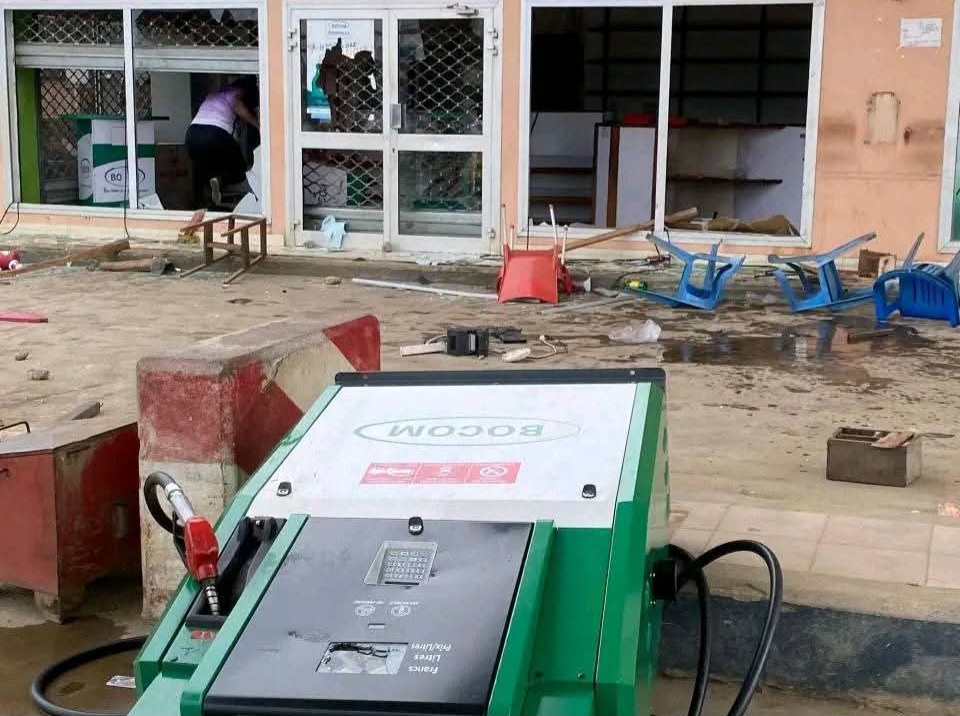
(LVDE) – Following violent demonstrations that erupted on the evening of the announcement of the October 12, 2025, presidential election results, several companies suffered looting and destruction at the hands of enraged protesters, endangering Cameroon’s economy and jobs.
The proclamation of the October 12, 2025, presidential election results, confirming the re-election of incumbent President Paul Biya, quickly sparked protests across the country. Initially announced as “peaceful marches” by an opposition leader, the gatherings devolved into violent riots, mainly targeting public and private businesses. The consequences of these events have been severe, particularly for companies such as Orange Cameroon, Société Générale, Tradex, TotalEnergies, Neptune Oil, Bocom, and Congelcam, all of which were directly affected by acts of vandalism.
The Groupement des Professionnels du Pétrole (GPP) issued a statement on October 28, 2025, condemning the systematic attacks on gas stations. “Since October 27, groups of protesters have been targeting our facilities,” lamented the GPP, highlighting the risk of explosions and the associated health hazards. In addition to creating thousands of jobs, these companies contribute significantly to the national economy through taxes and levies. “Each vandalized service station results in the loss of about 20 direct jobs,” the organization noted, adding that these acts have a domino effect on local SMEs that depend on these firms for their survival.
On social media, videos show the destruction and looting of Tradex installations, a subsidiary of the National Hydrocarbons Corporation (SNH) specializing in petroleum distribution. Service stations belonging to Neptune Oil, owned by Antoine Ndzengué, and Bocom, owned by billionaire Dieudonné Bogne, were also targeted.
However, the vandalism extended beyond fuel stations. In Douala, a Société Générale branch was ransacked, with computer equipment stolen, as well as an Orange Cameroon mobile telephony agency. Likewise, the cold storage facilities of Congelcam, headed by Sylvestre Ngouchingué, were looted—a heavy blow to a major player that controls about 80% of Cameroon’s fish market.
These incidents illustrate the growing tension in the country, where social discontent is increasingly expressed through violence. Although the financial losses of the affected companies have not yet been officially assessed, the economic repercussions are already being felt. The destruction of infrastructure and job losses threaten the livelihoods of countless Cameroonian families.
In essence, the current crisis highlights not only the fragility of Cameroon’s political climate but also its direct impact on the national economy. Businesses, which play a vital role in job creation and economic development, now find themselves on the front lines of turmoil that could have long-term repercussions on the country’s economic fabric. The need for dialogue and reconciliation has never been more urgent to prevent the recurrence of such crises in the future.
Esther Grâce

 La voix des entreprises
 Esther Grâce