

GABON : Gabon Oil Company reclaims the Dinonga-Irondou field

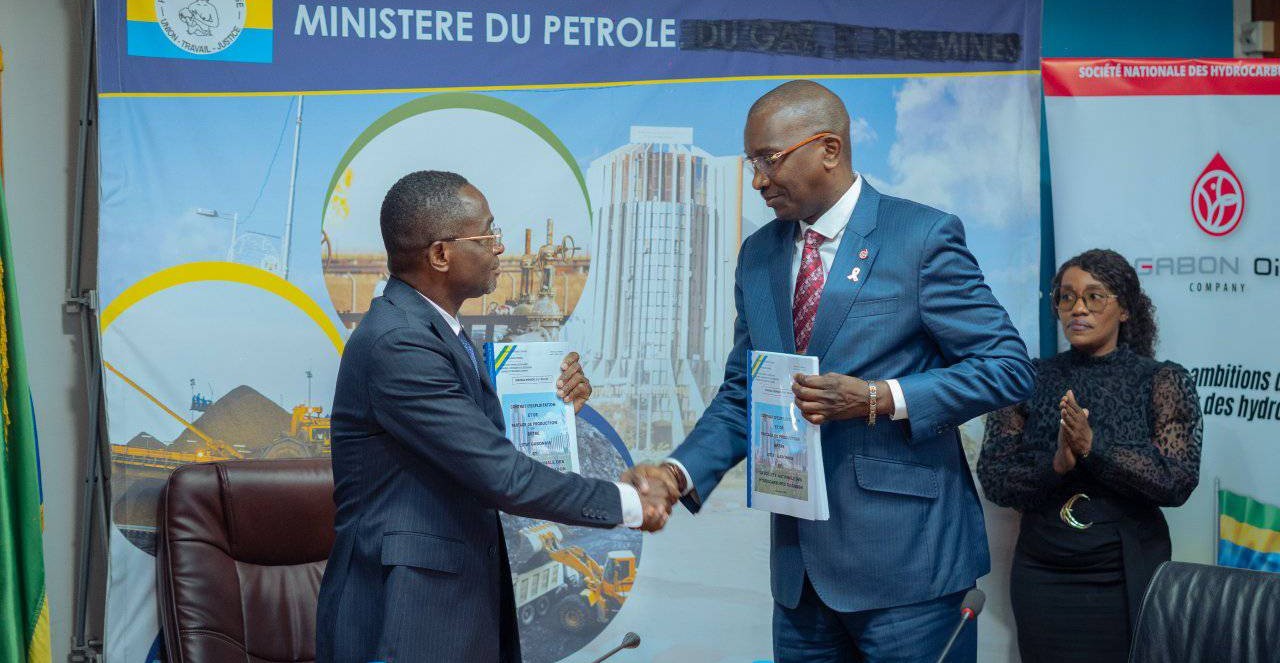
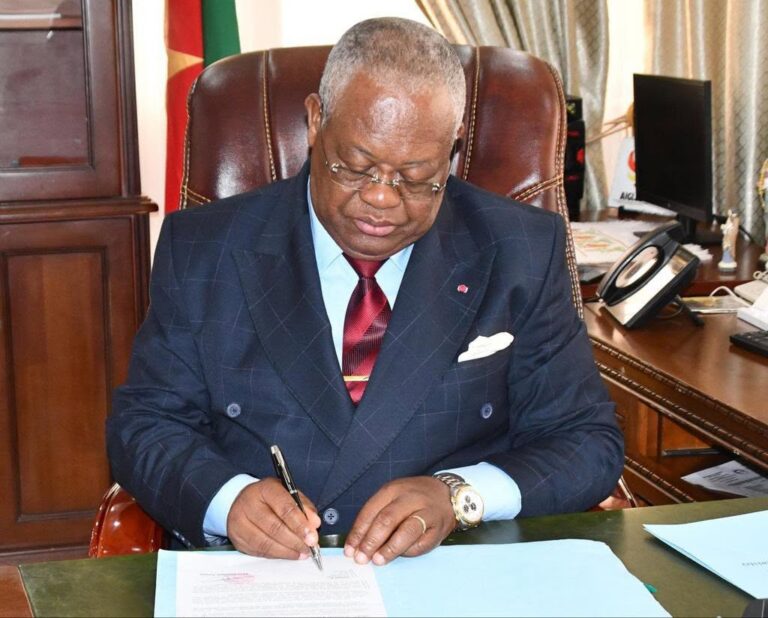
(LVDE) – On October 10, 2025, the company signed an Exploration and Production Sharing Contract (EPSC) for the Dinonga-Irondou field, marking a major milestone in the revival of Gabon’s oil sector and the State’s renewed involvement in the management of its natural resources.
Gabon is undergoing a decisive shift in its energy policy. On October 10, 2025, Sosthène Nguema Nguema, Minister of Petroleum, and Marcellin Simba Ngabi, Managing Director of the Gabon Oil Company (GOC), officially signed an Exploration and Production Sharing Contract for the Dinonga-Irondou field. Located within Gabon’s oil basin, this field was historically operated by foreign companies. The transfer of its management to GOC clearly demonstrates the authorities’ determination to strengthen the State’s role in the development of its petroleum resources.
This initiative is part of a broader strategy to enhance State control over the oil value chain. According to the Ministry of Petroleum, this move ushers in a new era for the sector, which also includes the redeployment of the mature Tsiengui and Obangué fields, now under GOC’s management. The main objective is to boost onshore production, create local jobs, and maximize State revenues.
Marcellin Simba Ngabi expressed his satisfaction with the agreement, highlighting a “stable and predictable contractual framework,” essential for responsible and sustainable operations. He also revealed that GOC is engaged in a modernization program to upgrade infrastructure and improve technical performance, paving the way for a successful revival of production activities on these fields.
The signing comes at a critical time. Recent data from the Directorate General of Economy and Fiscal Policy (DGEFP) shows a significant decline in national oil production. In the first quarter of 2025, Gabon produced 2.873 million tonnes of crude oil, equivalent to 20.97 million barrels — down from 2.995 million tonnes (21.86 million barrels) during the same period in 2024. In absolute terms, this represents a loss of about 891,000 barrels, or a 4.1% decrease. The production index fell by 1.2% quarter-on-quarter and 5% year-on-year, while exports also showed signs of slowing.
The GOC’s renewed leadership comes as Gabon seeks to revitalize its oil sector and reduce dependence on foreign operators. The government hopes that this new momentum will not only boost production but also generate greater revenues to support the country’s economic development.
Ambitions are high, and the Gabonese government appears determined to reshape the national oil landscape. GOC’s return to the Dinonga-Irondou field could serve as the much-needed catalyst to revive a declining sector and restore confidence among economic stakeholders. The next steps will be crucial to ensuring the success of this initiative — both technically and economically.
Sorelle Ninguem

 La voix des entreprises
 Esther Grâce