

PUBLIC SECURITIES : Central Africa faces constrained growth

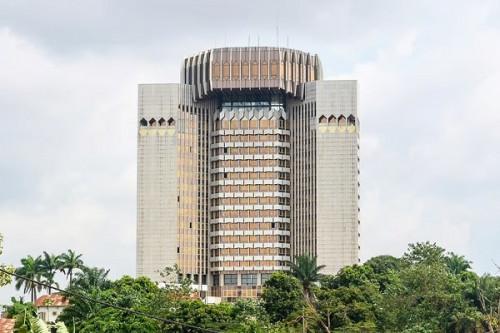
Headquarters of the Bank of Central African States (BEAC)
(LVDE) – As of the end of July 2025, the total outstanding public securities in the CEMAC region reached 9,086.6 billion CFA francs, marking a 31.1% increase compared to the previous year. However, rising borrowing costs are raising concerns about the financial health of member states.
The public securities market within the Central African Economic and Monetary Community (CEMAC) is experiencing strong momentum. By end-July 2025, the total volume of securities issued by CEMAC member states — Cameroon, Congo, Gabon, Equatorial Guinea, Chad, and the Central African Republic — stood at 9,086.6 billion CFA francs, according to data from the Securities Settlement and Custody Unit (CRCT) of the Bank of Central African States (BEAC). This represents a significant 31.1% increase year-on-year.
This growth, however, comes amid rising borrowing costs. The average yield on Treasury bills (BTA) — short-term financing instruments — increased from 6.52% to 6.92% over the past year. Similarly, the average yield on Treasury bonds (OTA) — used for medium- and long-term financing — climbed to 9.48% by the end of July 2025, up from 9.06% a year earlier.
This upward trend reflects a tightening of financing conditions for CEMAC governments, even as these instruments continue to attract investors. Primary Dealers (SVTs) play a key role in this process, drawn by competitive rates and the security of BEAC’s settlement framework. Yet, these institutions are increasingly feeling the pressure of rising sovereign demand, raising concerns about their ability to continue meeting states’ financing needs.
The average coverage rate of financing on the public securities market has plummeted — from 71.81% to just 6.40% year-on-year by the end of July 2025, according to BEAC data. This sharp decline stems from two main factors: sustained borrowing needs from member states and the regulatory constraints imposed on SVTs, which must comply with strict prudential ratios.
In its latest monetary policy report published in September 2025, BEAC expressed concern over the increase in net claims on governments. The central bank warned that this trend could lead to crowding out of the private sector and excessive exposure of the banking system to sovereign risk, calling for greater vigilance.
Despite these challenges, the CEMAC public securities market remains a vital source of financing for member states. This reality underscores the need for a delicate balance between government financing requirements and the stability of the regional banking system. The evolution of outstanding debt, interest rates, and compliance with prudential ratios by SVTs will be key indicators of the market’s resilience and financial health.
In this context, the growth of public securities could face significant headwinds if borrowing costs continue to rise. Market participants must therefore navigate carefully to ensure sustainable financing while safeguarding regional economic stability. The future of CEMAC will depend on its member states’ ability to balance their financing needs with the imperative of maintaining a strong and resilient banking sector amid mounting economic challenges.
Tressy Chouente

 Tressy CHOUENTE


 Esther Grâce