


SIC : Towards a 25-Billion CFA Franc Investment for a Real Estate Complex in Douala

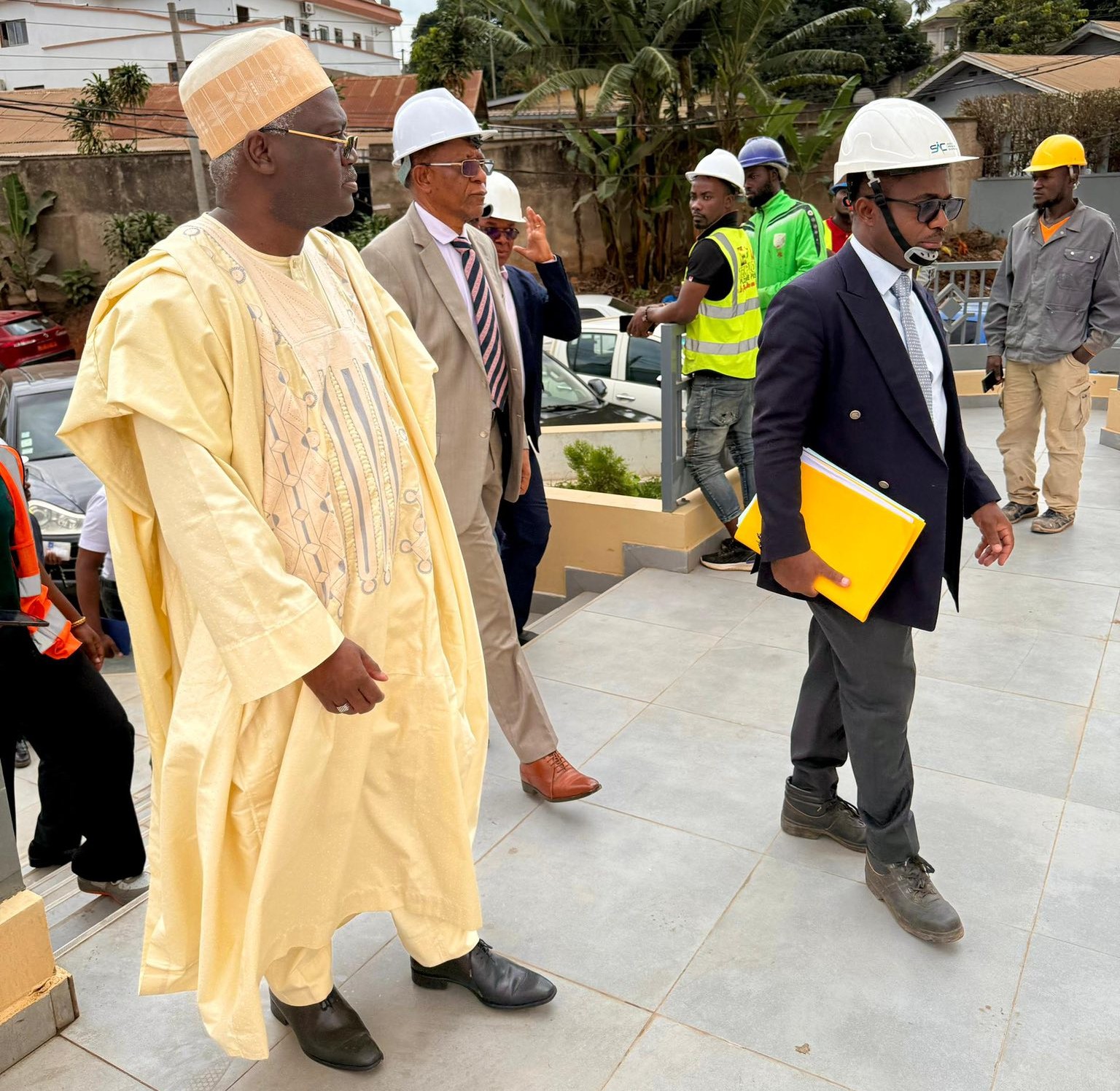
(LVDE) – The Cameroon Real Estate Company (Société Immobilière du Cameroun, SIC) announced on September 23, 2025, its ambitious plan to build a residential complex in the Bonapriso district of Douala, with an investment of 25 billion CFA francs. Supported by three local financial institutions, the project aims to meet the growing housing needs in the country’s economic capital.
On September 23, 2025, in Yaoundé, SIC unveiled its plan to develop a residential complex in Douala, backed by a 25-billion CFA franc investment. This initiative seeks to address the high demand for housing in the economic hub. The project will be carried out in partnership with three local banks: NFC Bank, Commercial Bank Cameroon (CBC), and Union Bank Cameroon (UBC). Although the distribution of investment has not been disclosed, SIC’s General Manager, Ahmadou Sardaouna, confirmed that “these three financial partners will accompany us in making this project a reality.”
Before turning to Douala, SIC had already proven itself in Yaoundé, where it inaugurated its first luxury real estate complex, setting the standard it now intends to replicate in Douala. According to Sardaouna, the upcoming Douala project will mirror the one built in the capital. On May 23, 2024, SIC began marketing 152 premium apartments in this complex, known as Le Mfoudi. During the September 23 press conference, it was revealed that the project—launched in 2022—had reached a 99% completion rate. Of the 152 apartments available, 52 had already been sold, generating revenues of 6 billion CFA francs.
The Yaoundé residence includes apartments ranging from one to five bedrooms, along with commercial spaces and parking facilities. Prices vary from 30 million to nearly 500 million CFA francs. To attract buyers, SIC primarily targets the Cameroonian diaspora. A memorandum of understanding was signed with the Ministry of External Relations to facilitate the promotion of this complex and other future SIC projects.
Despite these advances, SIC still faces major challenges. Since its creation in 1952, it has built barely 11,000 housing units in over 70 years. Meanwhile, Cameroon’s housing deficit is officially estimated at 2.5 million units. The situation is particularly pressing in Douala, where population growth and rapid urbanization are putting severe strain on the housing market.
The Douala project is therefore more than just a commercial initiative—it is also a response to the growing housing crisis. SIC hopes that this complex will help ease the deficit by providing quality housing and improving access to homeownership for many Cameroonians. The construction of this new residential complex represents not only a development opportunity for Douala but also a reinforcement of SIC’s position in the national real estate market.
With this investment, SIC is not merely building housing; it is positioning itself within a broader dynamic of sustainable urban development, essential for the well-being of communities. Expectations are therefore high regarding the impact of this project on Douala’s real estate landscape and on meeting the housing needs of Cameroonians. By combining innovation with social commitment, SIC aims to play a leading role in transforming the real estate sector in Cameroon.
Esther Grace

 La voix des entreprises
 Anatole Bidias
 Amélie Yandal
 Esther Grâce