

INDUSTRIALIZATION : CNPS Joins Forces with Arise IIP to Invest in a Series of Projects in the Dibamba Industrial and Port Zone


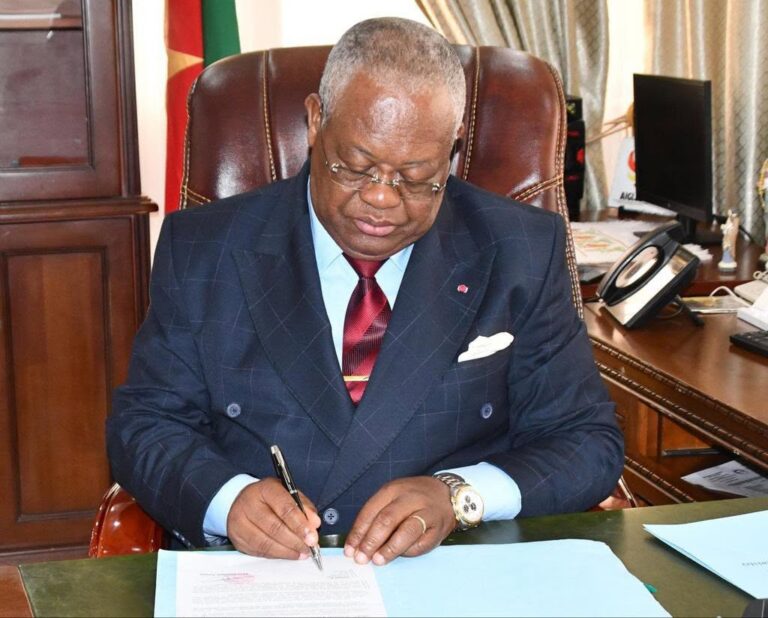
Olivier Mekulu Mvondo, Director General of the National Social Insurance Fund (CNPS)
(LVDE) – On September 11, 2025, in Yaoundé, Cameroon’s National Social Insurance Fund (CNPS) sealed a partnership with the Indian group Arise Integrated Industrial Platforms (Arise IIP). This collaboration paves the way for major industrial projects in Cameroon, with significant impacts on job creation and economic growth.
In a decisive turning point for Cameroon’s industry, CNPS and Arise IIP have established a promising partnership, marking progress in cotton sector transformation and the creation of an industrial hub. While the total investment amount remains undisclosed, CNPS management estimates that the initiative could create about 15,000 jobs and contribute between 0.5% and 0.7% to national GDP. The project is part of a clear ambition to revitalize the cotton sector, often seen as an underexploited resource.
The flagship project consists of building a cotton processing plant designed to locally produce a wide range of goods, including fabrics, clothing, bed sheets, and towels. Currently, the sector focuses mainly on exporting raw fiber, which limits value addition within the country. The establishment of this factory in the Dibamba Industrial and Port Zone, a 517-hectare site, aims to relieve congestion at the Port of Douala while supporting the national industrialization strategy.
The industrial zone, with a development cost estimated at about CFAF 230 billion, already saw initial works launched by Arise IIP on July 24, 2025. The entry of CNPS as a strategic partner strengthens the ambition to create a robust industrial ecosystem in Cameroon. According to experts, this initiative could transform the country’s industrial landscape by redefining value chains and stimulating the local economy.
Beyond the cotton project, CNPS also plans to develop a logistics platform for container reception and storage. This facility is expected to handle nearly 4 million m³ annually, representing about one-third of the current capacity of the Port of Douala. Additionally, over 100 hectares will be allocated for new production and processing units, with the possibility of extending to 220 hectares. This development is part of an effort to attract other industries and make Dibamba a true regional hub for production and exports.
CNPS’s involvement in the project reflects a dual strategy: securing its investments while playing an active role in the country’s economic transformation. Its Director General emphasized that this investment represents an opportunity with strong economic and social guarantees, while ensuring the liquidity and security essential to the sustainability of Cameroon’s social security system.
The works linked to the three agreements signed are expected to be completed within 24 months. If this timeline is met, Cameroon could make a significant leap in the industrialization of its strategic sectors, particularly cotton. It would also reinforce the country’s logistical sovereignty and boost its attractiveness to foreign industrial investors.
This new momentum could reshape the contours of Cameroon’s economy, fostering sustainable and inclusive development. Expectations are high, both among local stakeholders and foreign investors, and the outcome of this partnership will be closely watched for its economic and social impacts.
Esther Grace

 La voix des entreprises
 Anatole Bidias
 Amélie Yandal
 Esther Grâce