

PUBLIC ENTERPRISES : Paul Biya Announces Major Shake-Up at the Helm of State-Owned Companies


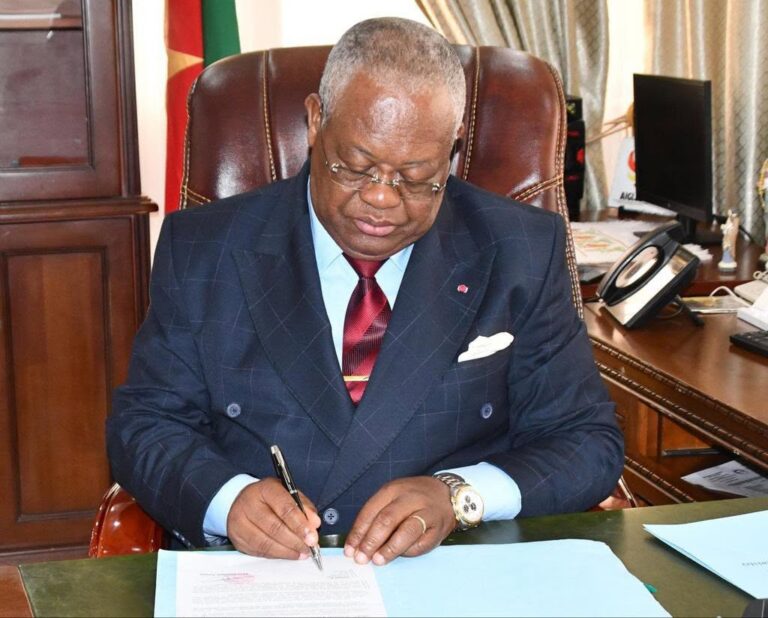
Paul Biya, President of the Republic of Cameroon, during his address to the youth on February 10, 2026.
(LVDE) — In his February 10, 2026 address to the youth, on the eve of the 60th Youth Day celebrations, Paul Biya announced an upcoming renewal of the leadership of state-owned enterprises, signaling an imminent generational shift. The statement comes amid university reports and economic analyses criticizing the irregularity of numerous mandates and the weak performance of several public companies, whose financial difficulties heavily weigh on the national budget.
Yaoundé held its breath as the presidential message was delivered. Just hours before the festivities dedicated to the youth, Paul Biya, re-elected in November 2025 for an eighth term, outlined the contours of a new political phase. The Head of State pledged to entrust greater responsibilities to young people and women, explicitly mentioning the gradual replacement of heads of state-owned companies and the formation of a new government team.
The announcement comes against a backdrop of mounting criticism over the governance of public enterprises. In June 2025, Professor Viviane Ondoua Biwolé published a study titled “République exemplaire” (“Exemplary Republic”), widely covered by the national press. The analysis revealed that 71 chairpersons out of 112 entities examined were serving in irregular situations, representing a non-compliance rate of 63.39%. According to the study, 66.66% of heads of public establishments and 56.75% of leaders of public enterprises had exceeded the legal term limits established under the 2017 laws governing state-owned companies.
General management positions are also affected. As early as July 2024, the same academic identified 86 chief executive officers and deputy chief executive officers serving beyond their legal mandates. Regulations limit their terms to three years, renewable twice, for a maximum of nine years. As of July 12, 2026, officials appointed in 2017 will reach this cap, making a decision by the authorities unavoidable in order to prevent illegality.
Beyond compliance with legal provisions, economic efficiency remains a central concern. Several public enterprises continue to accumulate chronic deficits. Recent finance laws indicate that transfers and subsidies to public entities amount each year to several hundred billion CFA francs. Budget reports reviewed by analysts and specialized media emphasize that such support is intended to offset structural losses and sustain the cash flow of companies burdened by high operating costs and insufficient profitability.
In its latest assessments of Cameroon’s economic program, the International Monetary Fund stresses the need to improve the governance of public enterprises and rationalize public spending as key drivers of fiscal sustainability. The World Bank, for its part, advocates for management modernization and greater financial transparency.
The President’s commitment to fostering a generational renewal therefore appears as a response to academic, financial, and institutional concerns. The challenge now lies in translating this intent into concrete action through appointments that comply with legal provisions and are performance-oriented. For many young graduates and executives awaiting opportunities, the announcement opens the prospect of a profound renewal of the public sector apparatus, at a time when demands for rigor and efficiency have never been more pressing. Anatole Bidias

 La voix des entreprises
 Esther Grâce