AFREXIMBANK : 33rd Annual Meetings Scheduled for June in Egypt

(LVDE) – In a global environment marked by geopolitical tensions and rising protectionism, Afreximbank is preparing for a strategic gathering in El Alamein. Scheduled from June 21 to 24, 2026, the pan-African bank’s Annual Meetings aim to mobilize financing and accelerate the continent’s industrialization through intra-African trade.
 Tressy CHOUENTE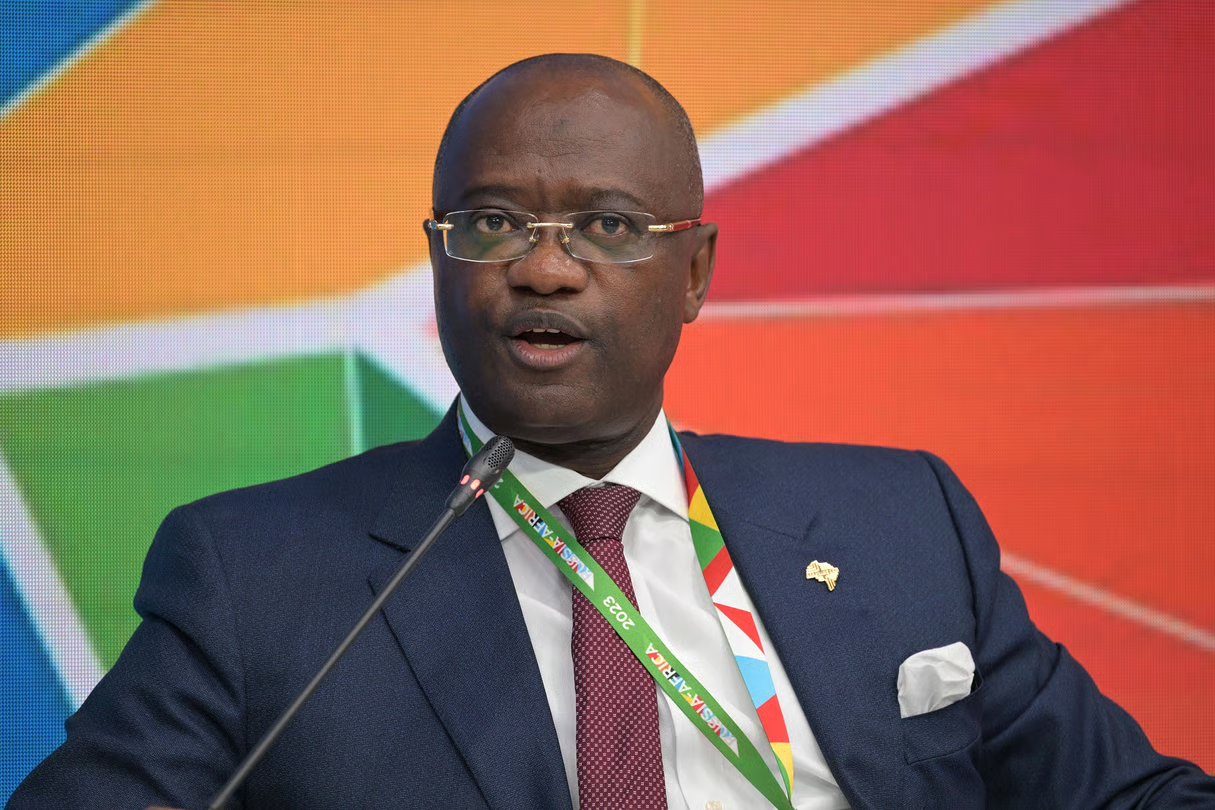
The African Export-Import Bank (Afreximbank) intends to make its 33rd Annual Meetings a key driver of economic action. The institution announced on March 27, 2026, that this major event will take place in El Alamein, Egypt, against a backdrop of fragmented global trade, renewed protectionist policies, and multiple crises. Held under the theme “Intra-African Trade and Industrialization: The Path to Economic Sovereignty,” the meeting is expected to be a pivotal moment for redefining the continent’s priorities.
Over four days, heads of state, policymakers, investors, and business leaders will engage in strategic dialogues aimed at identifying high-impact projects. The stated objective is to promote local processing of raw materials and strengthen African value chains, in line with the ambitions of the African Continental Free Trade Area (AfCFTA). According to George Elombi, President of Afreximbank, the challenge now is to move to the next phase by prioritizing industrial production and value addition, following a decade focused on laying the foundations for intra-African trade.
Egypt’s selection as host country highlights its growing role in Africa’s economic landscape. For Central Bank Governor Hassan Abdalla, hosting the event reflects the country’s commitment to supporting pan-African initiatives and promoting the logistical infrastructure required for continental integration. This comes at a time when intra-African trade remains limited, accounting for around 15% of total trade, compared to over 60% in Europe, according to data from the African Development Bank.
Beyond institutional discussions, Afreximbank’s Annual Meetings are positioning themselves as a true continental marketplace. Participants will have the opportunity to forge partnerships, access financing, and structure bankable projects in key sectors such as industry, logistics, and energy. In 2025, the bank already accounted for nearly 65% of the syndicated loan market in Africa, confirming its central role in development financing.
Since its inception, Afreximbank has established itself as a major player in trade finance and industrial development. It now relies on several instruments, including the Fund for Export Development in Africa and its insurance subsidiary, AfrexInsure, to support governments and businesses in their projects.
As African economies seek to reduce their dependence on raw material exports, the El Alamein meeting appears as a test of maturity. It will need to demonstrate the continent’s ability to turn its ambitions into concrete actions by mobilizing financial resources and strengthening regional synergies. More than just an institutional gathering, these meetings could mark a new milestone in Africa’s quest for economic sovereignty.
À propos de l'auteur





 La voix des entreprises
 Raphael Mforlem