THE STRAIT OF HORMUZ : A Strategic Pivot of the Global Economy

(LVDE) – One of the most sensitive maritime passages in the world, the Strait of Hormuz concentrates major economic, energy, and geopolitical stakes. Its control and stability have a direct impact on global markets, particularly oil.
 Raphael Mforlem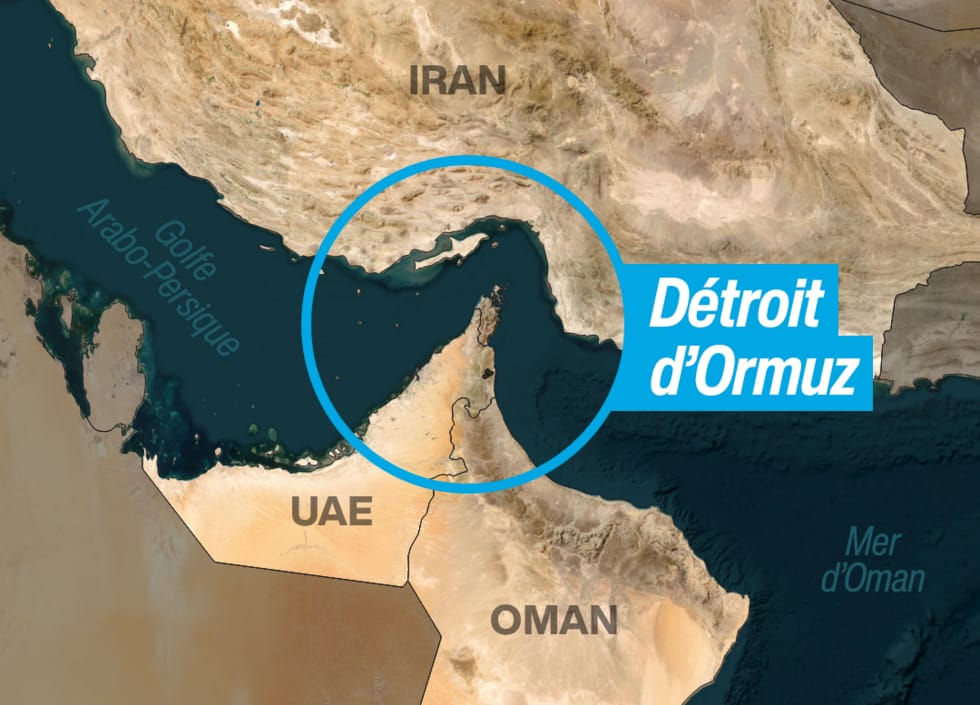
The Strait of Hormuz
Located between Iran and the Sultanate of Oman, the Strait of Hormuz is a narrow yet vital maritime corridor for international trade. About 33 kilometers wide at its narrowest point, it links the Persian Gulf to the Gulf of Oman, providing strategic access to the Indian Ocean. Despite its limited width, it handles intense maritime traffic, largely dominated by hydrocarbon exports.
Every day, nearly one-fifth of the world’s oil consumption passes through this route. Major exporters in the Persian Gulf—such as Saudi Arabia, the United Arab Emirates, Kuwait, and Iraq—depend heavily on this passage to ship their production to Asian, European, and American markets. This concentration of energy flows gives the Strait of Hormuz a central role in stabilizing global oil prices.
Any disruption—whether due to military tensions, economic sanctions, or maritime incidents—immediately triggers market reactions. Periodic tensions between Iran and Western powers have repeatedly raised fears of a potential blockade of the strait, leading to spikes in crude oil prices. This persistent geopolitical risk has pushed governments and oil companies to explore alternative logistics routes, such as pipelines bypassing the area, although these solutions remain limited.
Beyond oil, the Strait of Hormuz is also crucial for the transport of liquefied natural gas (LNG), particularly from Qatar, one of the world’s leading exporters. This energy dependence further increases the vulnerability of the global economy to any instability in the region.
Ultimately, the Strait of Hormuz stands as a true barometer of global geopolitical and economic tensions. Securing this passage remains a top priority for major powers, aware that any disruption to free navigation in this area would have immediate repercussions on the global economy, supply chains, and consumers’ purchasing power.
À propos de l'auteur





 Esther Grâce
 La voix des entreprises