INSURANCE : Sonara calls on local companies to cover its industrial risks

 La voix des entreprises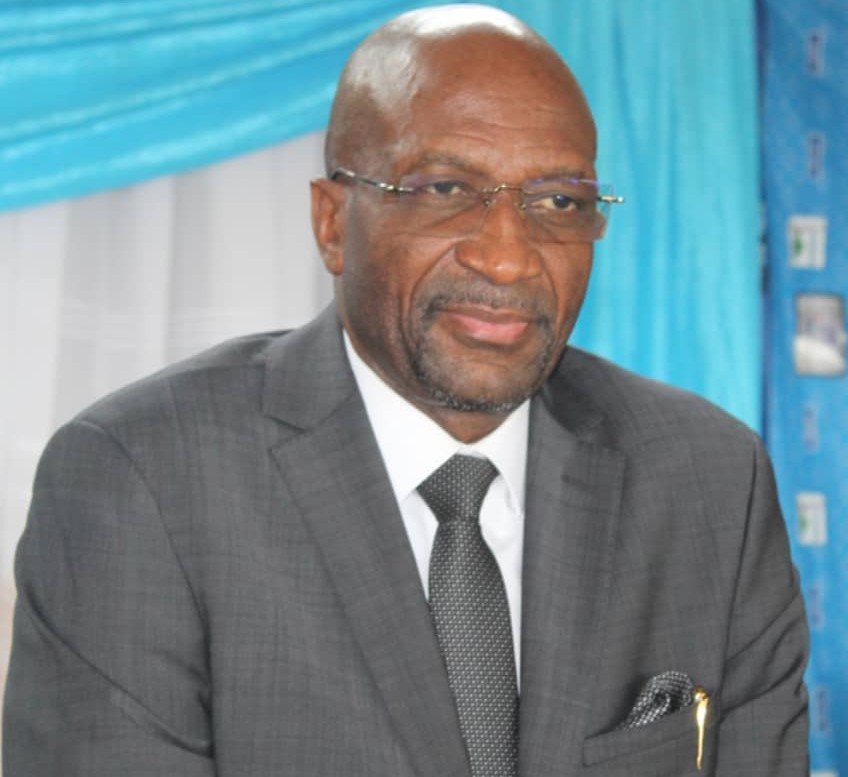
Harouna Bako, Chief Executive Officer of the National Refining Company (Sonara).
(LVDE) — The National Refining Company (Sonara) has relaunched its insurance program for the 2026–2029 period and is inviting bids from insurance companies operating under Cameroonian law. Through several tenders estimated at 6.5 billion FCFA, the state-owned company aims to secure its industrial facilities, logistics operations and personnel, at a time when the country’s only refinery is undergoing reconstruction and modernization.
In Cameroon, the gradual revival of activities at the National Refining Company is being accompanied by a comprehensive risk management framework. On March 4, 2026, the company’s management issued several calls for tenders related to the implementation of its insurance program for the coming years. With an overall value estimated at 6.5 billion FCFA, the contract is financed through the company’s operating budget and seeks to select one or more Cameroonian insurance firms capable of covering risks linked to the refinery’s industrial and operational activities.
Located in Limbe, in the South-West region, Sonara remains Cameroon’s only oil refinery and plays a strategic role in the national supply of petroleum products. In this context, securing its infrastructure and operations is a critical challenge. The insurance program launched by the company is structured around several segments designed to cover all the risks to which the industrial facility is exposed.
The largest component concerns insurance coverage for industrial assets, estimated at around 5.1 billion FCFA. This protection targets refining installations, technical equipment and essential infrastructure required for the site’s operations. It is intended to safeguard the refinery’s strategic assets against potential incidents that could disrupt production.
The program also provides coverage for civil liability and staff health insurance, estimated at 742.5 million FCFA. In addition, it includes motor vehicle insurance for the company’s fleet, valued at nearly 248 million FCFA, as well as insurance dedicated to the transportation of petroleum products—including maritime and air operations—representing about 386 million FCFA.
A key innovation in this new framework is the inclusion of risks associated with the rehabilitation and modernization works currently planned at the refinery. These projects notably involve expanding storage capacity, upgrading instrumentation systems, installing new industrial equipment, as well as carrying out various civil, electrical and mechanical engineering works. The construction of energy plants aimed at strengthening the site’s autonomy is also among the planned initiatives.
By reserving this tender for insurance companies incorporated under Cameroonian law, Sonara intends to encourage the development of local expertise in covering major industrial risks. However, this approach also entails strict requirements for bidders, particularly in terms of financial strength and reinsurance capacity. According to the tender documents, the required reinsurance treaties range between 20 and 200 billion FCFA depending on the nature of the risks to be covered.
This cautious approach stems from the fire that occurred in May 2019, which severely damaged four of the refinery’s thirteen production units and led to a prolonged shutdown of operations. The incident also triggered lengthy discussions between the company and its insurers regarding compensation mechanisms.
Today, Sonara is actively preparing the relaunch of its refining capacity. The company aims to gradually resume operations from 2027 with an estimated production of 3.5 million tonnes per year. This redeployment forms part of the Acceleration Plan for the restructuring and rehabilitation of Sonara, which has a total budget of around 300 billion FCFA. The program includes the reconstruction of damaged units between 2026 and 2027, followed by broader modernization of the facilities and the construction of new industrial units—including a hydrocracker—by 2030.
In the longer term, Cameroonian authorities are even considering doubling the country’s refining capacity by 2035 in order to strengthen national energy security and reduce dependence on imports of refined petroleum products.
Amelie Yandal
À propos de l'auteur




 Tressy CHOUENTE

 Raphael Mforlem