
SECOND BRIDGE OVER THE DIBAMBA : Magil Construction Ready to Mobilize CFA59 Billion for the Project

 La voix des entreprises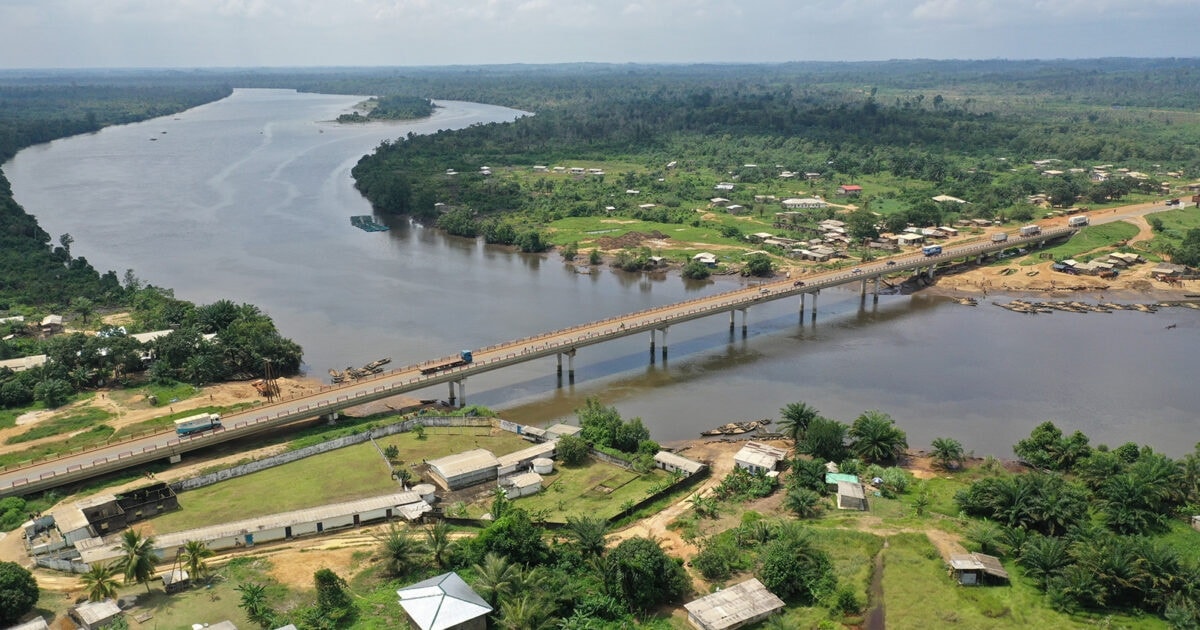
Aerial view of the first bridge over the Dibamba.
(LVDE) — At the eastern entrance of Douala, a strategic infrastructure project is resurfacing. The Canadian group Magil Construction is now proposing to handle not only the construction but also the financing of the second bridge over the Dibamba, with an estimated investment of CFA59 billion. The proposal could unlock a project that has been awaited for several years.
On February 24, 2026, discussions reached a new milestone at the headquarters of Cameroon’s Ministry of Public Works of Cameroon in Yaoundé. During a meeting with the Minister of Public Works, Emmanuel Nganou Djoumessi, the representative of the Canadian firm, Ralph Tropea, presented a structured proposal based on an EPC+F model—Engineering, Procurement, Construction, plus Financing. The approach aims to accelerate the launch of the works without immediately placing additional pressure on public finances.
According to sources close to the project, the proposed financial envelope is around CFA59 billion, a figure consistent with the initial technical estimates. The initiative comes after the original financing plan, valued at CFA85.5 billion and announced in 2021 with the support of Standard Chartered Bank in London, failed to materialize. The absence of financial closure significantly delayed the implementation of the project, despite its classification as a priority infrastructure.
On the ground, the urgency is evident. The current Dibamba bridge, which stretches more than 400 meters and was commissioned over four decades ago, carries heavy traffic, particularly trucks traveling between Douala, Yaoundé, and the Port of Kribi. Maintenance operations have been launched following vibrations reported by road users. Authorities say technical assessments are ongoing to ensure the safety of motorists.
The construction of a second structure is part of the broader development of Douala’s eastern access road, a key component of the National Road N3 corridor. This axis connects not only the political capital but also the Douala–N’Djamena and Douala–Bangui trade corridors. According to data from Cameroon Customs, these logistics routes channel approximately CFA350 billion worth of goods annually to Chad and CFA55 billion to the Central African Republic, confirming Douala’s central role in sub-regional trade.
For the authorities, the new bridge would help improve traffic flow, reduce chronic congestion at the eastern entrance of Douala, and secure the transit of goods. The ministry is currently examining whether the proposal aligns with the 2026–2027 budget ceilings and public debt regulations. If approved, construction could begin after the second phase of the eastern entrance road project, scheduled for mid-2026.
Beyond the bridge itself, the initiative highlights the financing challenges of infrastructure projects in Central Africa, where partnerships combining private capital and technical expertise are increasingly seen as alternatives to traditional sovereign funding mechanisms.
Raphael Mforlem
À propos de l'auteur