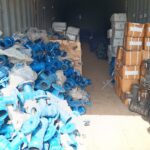
SCANNING AT DOUALA PORT : SGS To Reimburse Excess Fees Charged to Economic Operators

 La voix des entreprises
(LVDE) — After several months of tension that disrupted commercial operations at the Port Autonome de Douala, the government has announced a reimbursement mechanism for double scanning fees collected from economic operators. This decision aims to restore investor confidence and stabilize the business environment at one of Central Africa’s main port hubs.
The crisis linked to cargo scanning at the Port Autonome de Douala appears to be coming to an end following an official announcement from the Ministry of Finance. Finance Minister Louis Paul Motaze confirmed that the Société Générale de Surveillance (SGS) will reimburse excess payments made by importers and exporters during the contractual dispute period with a new control operator, Transatlantic D. SA.
The commercial dispute, which emerged at the end of December 2025, created a complex situation for economic operators. Companies were forced to pay scanning fees twice in order to release their cargo. This situation resulted from a legal conflict between the historic operator SGS and the new service provider appointed as part of the modernization of control services. The high volume of foreign trade transiting through the Douala port made this conflict particularly sensitive for the national economy.
The announced compensation mechanism should allow the reimbursement of all wrongly charged fees, thereby helping to restore financial stability for economic actors. Authorities believe this measure sends a strong signal to international partners, highlighting the importance of respecting contractual commitments within Cameroon’s business environment. According to economic analysts, this financial adjustment will also help reduce administrative bottlenecks that were slowing down cargo movement.
The issue of double payment had drawn strong criticism from business associations, which denounced the additional financial burden placed on SMEs and large companies. For several weeks, traders had faced a complex administrative and financial process before obtaining clearance for their goods. This situation had weakened the competitiveness of the port platform compared to other regional ports in the Gulf of Guinea.
Through the Ministry of Finance, the government reiterated that economic sovereignty involves selecting technical partners while respecting international contractual and legal standards. Authorities now aim to accelerate clarification of institutional responsibilities to prevent future disputes that could harm the country’s image among foreign investors.
This decision is part of a broader effort to improve the business climate. Port and financial authorities hope that resolving this crisis will increase foreign trade fluidity and strengthen Cameroon’s competitiveness in international trade.
Raphael Mforlem
À propos de l'auteur


 Tressy CHOUENTE
 Raphael Mforlem

 Esther Grâce