PALM OIL : Cameroon Targets Additional 20,500 Tons of Production in 2026

 La voix des entreprises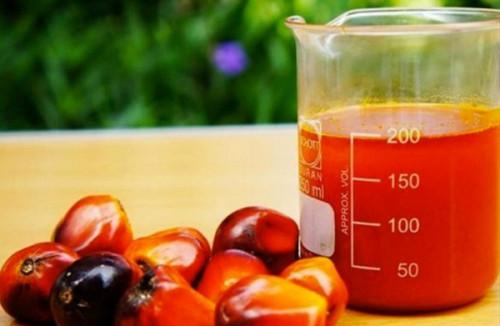
(LVDE) — Through its Economic and Financial Program, the Cameroonian government is setting new ambitions for the palm oil sector. The stated objective is to generate an additional 20,500 tons in 2026 in order to reduce a persistent structural deficit and curb import dependency, in a context of ongoing efforts to mobilize new financing.
The revival of strategic agricultural value chains features prominently in the roadmap presented by Prime Minister Joseph Dion Ngute. Among priority sectors, palm oil receives particular attention. Public authorities are planning an additional 20,500 tons of production in 2026, with the goal of strengthening self-sufficiency and reducing the country’s external trade deficit.
This policy direction is supported by the search for structural financing. Two loan agreements, totaling 51.7 billion FCFA, are being finalized with Standard Chartered Bank London. The funds are expected to support the construction of industrial plants for processing rubber and palm oil for the benefit of the Cameroon Development Corporation (CDC). The aim is to better add value to local raw materials while strengthening the link between agricultural production and industrial processing.
On the ground, recent statistics show mixed trends. In the first quarter of 2025, national crude palm oil production reached 77,630 tons, nearly three times the volume recorded in the previous quarter, driven by the peak of the main harvest season. However, on a year-on-year basis, this level declined by 10.6%. Official projections also forecast an overall production decrease of around 2% for the 2025 fiscal year.
In 2024, Cameroon produced 446,984 tons of crude palm oil. Despite this achievement, domestic supply remains below market demand. According to estimates from the Association of Oilseed Refiners of Cameroon, the structural deficit exceeds 500,000 tons per year. This chronic shortfall continues to drive imports : according to data from the National Institute of Statistics (INS), 409,000 tons were imported between 2017 and 2023, representing a cumulative expenditure of 280.4 billion FCFA.
The 2026 target therefore requires coordinated strengthening across the entire value chain. From improving plantation yields and providing technical support to producers, to increasing refining capacity and optimizing logistics, each segment will need reinforcement. Without sustained investment and effective governance, the supply-demand imbalance could persist, affecting the trade balance and the competitiveness of local industries.
Beyond volume growth, the challenge is to build a sustainable sector capable of meeting domestic demand while generating more local value addition.
Tressy Chouente
À propos de l'auteur





 Tressy CHOUENTE

 Raphael Mforlem

 Esther Grâce