REHABILITATION OF THE DOUALA–BANGUI CORRIDOR : MINTP and the World Bank Align on Project Priorities

 La voix des entreprises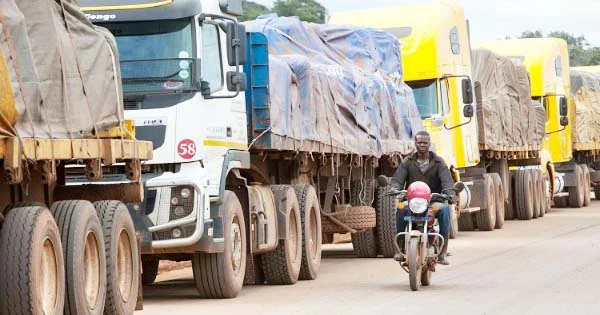
Corridor Douala–Bangui
(LVDE) — The Cameroonian government, through the Ministry of Public Works (MINTP), has reaffirmed its commitment to relaunch the rehabilitation of the Douala–Bangui corridor, a key route for trade and regional integration. The World Bank has pledged to support the project with $350 million (approximately 210 billion FCFA) to modernize infrastructure and enhance road safety.
The Douala–Bangui corridor, connecting the economic port city of Douala to the capital of the Central African Republic, is a critical link for cross-border trade and regional development. Aware of its strategic role, the Cameroonian government, via the MINTP, is accelerating the project’s preparation in coordination with the World Bank. This process took shape on January 20, 2026, during a consultation meeting between Emmanuel Nganou Djoumessi, Minister of Public Works, and a World Bank delegation led by Franz Dress-Gross, Regional Director for Infrastructure.
The discussions allowed both parties to align on the identification of needs, mobilization of resources, and technical priorities of the project. The World Bank confirmed its readiness to fund the operation up to $350 million, underlining the strategic importance of this corridor within Cameroon’s infrastructure portfolio. This announcement follows the identification mission conducted from January 12 to 16, 2026, involving the MINTP and relevant sectoral administrations, which produced a detailed assessment of constraints and requirements along the Douala–Yaoundé section.
Planned interventions include widening the Douala–Edéa section, constructing a second bridge over the Dibamba River, modernizing weigh stations at Edéa and Nomayos, and developing bypass roads around Douala and Yaoundé. These works will incorporate road safety measures and sustainable maintenance practices, while also promoting inclusive economic development and facilitating trade. A site visit along the Douala–Yaoundé stretch of National Road 3 allowed experts to assess the condition of the infrastructure and the scope of the required works.
Regional authorities, decentralized local governments, and sectoral partners were involved in the consultations, reflecting the government’s commitment to a participatory project that meets user needs and international technical standards. The alignment of positions between the MINTP and the World Bank represents a crucial step in project preparation and strengthens the prospect of a rapid, coordinated implementation.
At the conclusion of the discussions, both parties reaffirmed their joint commitment to the full rehabilitation of the Douala–Bangui corridor, aiming to secure the mobility of people and goods, support the national economy, and enhance regional integration within the CEMAC zone. The completion of this project is thus set to serve as a strategic lever for the development of Cameroon and its trading partners across the Gulf of Guinea and beyond.
Raphael Mforlem
À propos de l'auteur




 Tressy CHOUENTE
 Raphael Mforlem