CORPORATE FINANCING : Camtel and Bocom receive CFA72 billion in support from BEAC

 La voix des entreprises
(LVDE) — Long overlooked, BEAC’s special refinancing window is back in the spotlight. Through this mechanism, the regional central bank is injecting more than CFA72 billion into two major projects in Cameroon: the expansion of Camtel’s networks and the development of the G-Stone mining project, a subsidiary of Bocom.
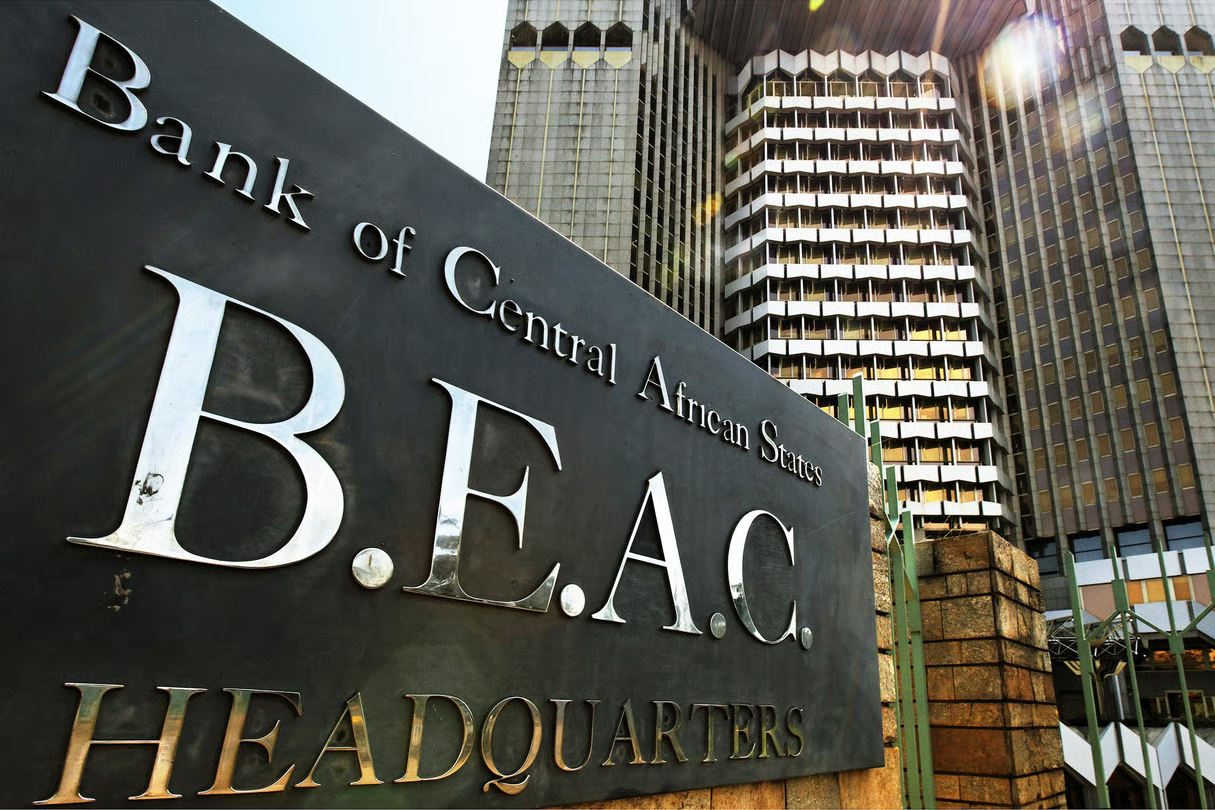
Within BEAC’s offices, the decision drew little attention from the general public, yet its implications for Cameroon’s economy are significant. A few weeks ago, the Monetary Policy Committee approved a total envelope of CFA72.5 billion to support two initiatives deemed strategic. The funding is channelled through the special refinancing window, a mechanism dating back to the 1980s and renamed in 2018, which enables the central bank to indirectly support loans granted by commercial banks.
One of the beneficiaries is G-Stones, the mining subsidiary of the Bocom group led by Dieudonné Bougne. The company, which is developing the Bipindi Grand-Zambi iron ore project, has secured CFA41.2 billion. This facility complements a broader financing package sought from a banking consortium headed by Afriland First Bank. Valued at several tens of billions of dollars, the project targets annual production of more than one million tonnes and is expected to generate strong economic spillovers in terms of industrialisation, job creation and government revenues.
Camtel is also benefiting from this momentum. The state-owned telecommunications operator raised a CFA52 billion loan from a banking pool led by Commercial Bank Cameroon, of which CFA31.3 billion is being refinanced by BEAC. These resources are intended to accelerate the rollout of 2G, 3G and 4G networks, with a focus on regional capitals, divisional headquarters, universities and higher education institutions, in a bid to narrow the digital divide.
The mechanism is based on a clear division of roles: commercial banks structure the files and grant the loans, BEAC refinances up to 60% of the amount, while project sponsors provide their own equity contribution. The loans are granted over long maturities, around seven years, at the policy rate. Projects exceeding CFA20 billion require approval from the Monetary Policy Committee, underscoring the strategic importance of the Camtel and G-Stones operations.
Despite its potential, the instrument remains underused across the CEMAC region. To date, only Cameroon and Congo have made significant use of it, with volumes mobilised increasing sharply in recent years. Under the leadership of Governor Yvon Sana Bangui, reflections are underway to ease access conditions and encourage more economic operators to leverage this tool. For its proponents, the special refinancing window could become a key instrument to finance import-substitution projects, preserve foreign exchange reserves and support structural transformation in Central African economies—provided it becomes better known and understood by the business community. Esther Grace
À propos de l'auteur





 Raphael Mforlem