HUMAN RIGHTS : CDHC and the United Kingdom Review Key Areas of Cooperation

 La voix des entreprises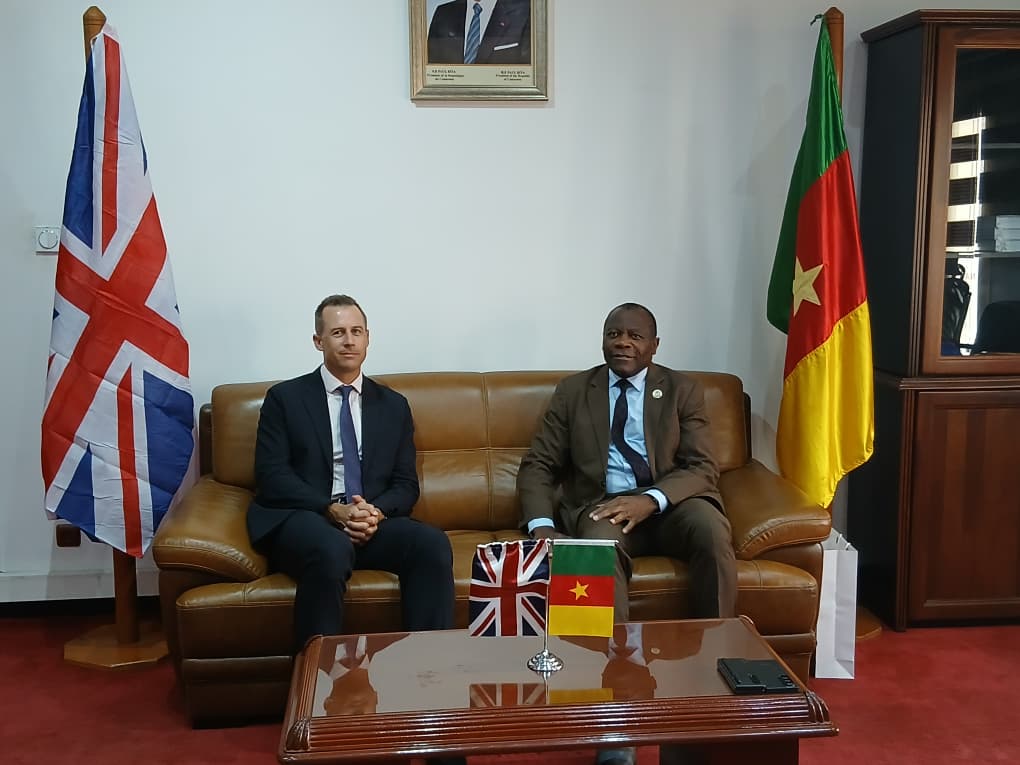
Professor James Mouangue Kobila, President of the Cameroon Human Rights Commission (CDHC), and His Excellency Matt Woods, British High Commissioner
(LVDE) — On January 14, 2026, in Yaoundé, the Cameroon Human Rights Commission (CDHC) welcomed the British High Commissioner to Cameroon to take stock of bilateral cooperation. At the heart of the discussions were the strengthening of fundamental rights, child protection, and the fight against gender-based violence.
In the quiet setting of an audience room in Yaoundé, Professor James Mouangue Kobila, President of the Cameroon Human Rights Commission (CDHC), received His Excellency Matt Woods, British High Commissioner. The meeting provided both institutions with an opportunity to revisit the main axes of their cooperation and to assess prospects for a sustainable partnership in promoting and protecting fundamental human rights.
The discussions took place in a cordial atmosphere, marked by in-depth exchanges on Cameroon’s achievements and challenges in the human rights sector. The participants notably addressed judicial reform, the strengthening of the rule of law, the prevention of gender-based violence, and child protection — priorities shared by both parties. The British High Commissioner commended the efforts of the Cameroonian government and emphasized the importance of consolidating existing structures to ensure governance that respects human rights.
“I would like to thank the President of the Commission for his availability. We were able to discuss the crucial role of the CDHC, its activities, and the complex challenges it faces. We also explored avenues for future collaboration, which looks extremely promising for our two countries,” Matt Woods said at the conclusion of the audience. The diplomat highlighted that the meeting not only facilitated an exchange of expertise but also promoted the implementation of shared practices to manage the inherent tensions in advancing human rights.

This strengthened cooperation will materialize through concrete measures, including British technical support to enhance the CDHC’s operational capacities, the establishment of training programs for security forces and civil society actors, and awareness-raising initiatives on the ground. Cameroonian authorities, for their part, reaffirmed their commitment to facilitating the engagement of both local and international organizations in human rights protection.
For civil society and the general population, the expected benefits are multiple : increased institutional transparency, improved protection of vulnerable groups, and the reinforcement of a culture of human rights respect across all levels of society. Additionally, the bilateral collaboration opens prospects for joint projects, knowledge exchange, and regular monitoring of commitments, contributing to a sustainable framework for governance and social justice.
At the end of the audience, the prevailing impression was one of alignment in interests and objectives. The dialogue between the CDHC and the United Kingdom reflects the commitment of both parties to build a pragmatic, results-oriented partnership capable of translating formal commitments into tangible actions on the ground while enhancing the credibility and effectiveness of human rights institutions in Cameroon.
Raphael Mforlem
À propos de l'auteur






 Raphael Mforlem