SME FINANCING : The State and the private sector join forces to boost access to resources for Cameroon’s entrepreneurial sector
 La voix des entreprises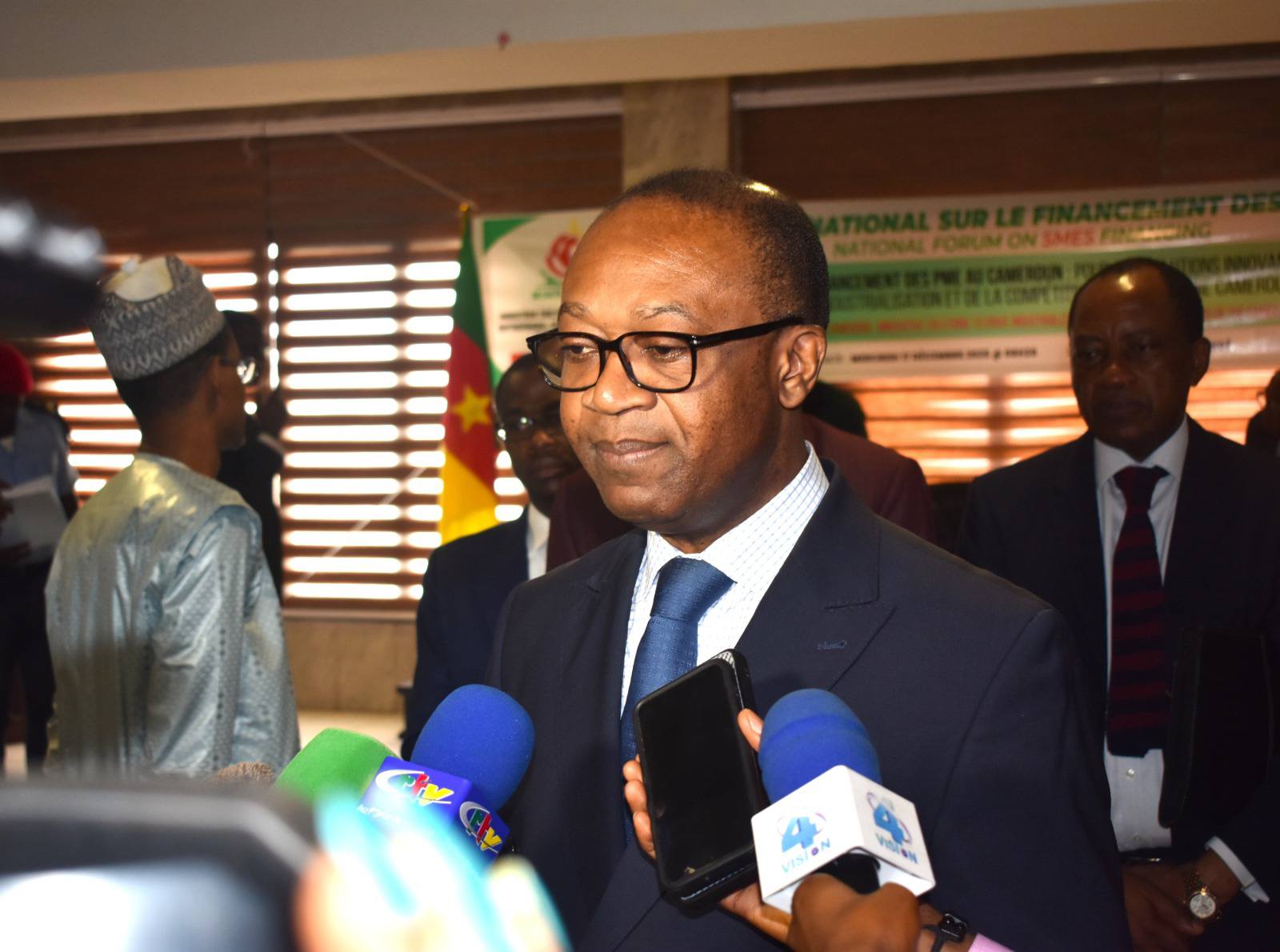
Achille Bassiliken III, Ministry of Small and Medium-Sized Enterprises, Social Economy and Handicrafts
(LVDE) — In response to persistent difficulties faced by small and medium-sized enterprises in accessing credit, the Ministry of Small and Medium-Sized Enterprises, Social Economy and Handicrafts organized a national forum on SME financing on 17 December 2025. This strategic meeting aimed to rethink financial mechanisms in order to support industrialization and strengthen the competitiveness of the Cameroonian economy.
In Yaoundé, the spotlight was placed on small and medium-sized enterprises, regarded as the backbone of Cameroon’s economic transformation. On 17 December 2025, the Ministry of Small and Medium-Sized Enterprises, Social Economy and Handicrafts (MINPMEESA) brought together public decision-makers, financiers and entrepreneurs at the National Forum on SME Financing. The initiative reflects the government’s determination to accelerate the structural transformation of the economy, in line with the import-substitution policy promoted by the National Development Strategy.
Accounting for nearly 99.8% of the country’s entrepreneurial fabric, SMEs play a central role in job creation and value addition. Yet their growth continues to be hampered by limited access to financial resources. The figures are telling: in 2024, only two out of ten companies obtained bank credit, highlighting the mismatch between traditional financing models and the realities of small businesses.
Discussions were structured around this observation under the theme: “Rethinking SME financing in Cameroon: innovative solutions in support of industrialization and competitiveness.” The stated ambition was clear—to identify more inclusive and better-adapted mechanisms capable of supporting local production and strengthening business resilience.
At the heart of the debates was the diversification of financing sources. The forum’s work sought to highlight alternatives to traditional bank credit, often considered inaccessible or ill-suited. At the close of discussions, three non-bank financing mechanisms deemed most relevant to Cameroon’s ecosystem are expected to be proposed to the authorities.
Beyond financial solutions, the forum also served as a platform for reflection on the overall structuring of the ecosystem. A roadmap comprising ten priority actions to be implemented over a three- to five-year period is currently being developed. It is intended to serve as a foundation for targeted reforms aimed at improving coordination, efficiency and the sustainability of existing mechanisms.
Aligned with international initiatives—particularly the Global SME Finance Forum launched by the International Finance Corporation (IFC) in 2015—the meeting brought together a wide range of stakeholders. Public administrations, banks, international financial institutions, equity investors, guarantee funds, digital microcredit platforms and mobile network operators shared their analyses. Around twenty SMEs also took part in the discussions, providing concrete insights into on-the-ground challenges.
Through this forum, the Cameroonian government reaffirms its determination to make SME financing a key lever for industrialization, economic competitiveness and more inclusive growth.
Raphael Mforlem
À propos de l'auteur






 Raphael Mforlem