DOUALA–YAOUNDÉ ROAD : AFD to mobilize CFA 98 billion for rehabilitation
 La voix des entreprises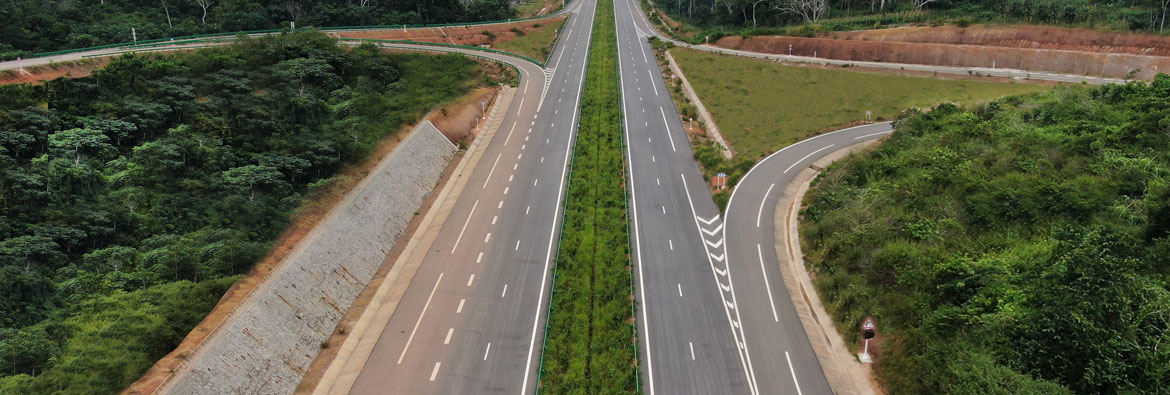
(LVDE) — The French Development Agency (AFD) has confirmed its commitment to mobilize €150 million, equivalent to CFA 98 billion, for the rehabilitation of the Yaoundé–Douala road. During a meeting with the Minister of Public Works, the key stages of the project were outlined.
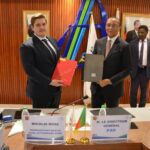
On December 11, 2025, a decisive meeting was held at the Ministry of Public Works (MINTP) between representatives of the French Development Agency (AFD) and officials in charge of the Yaoundé–Douala road rehabilitation project. The meeting reaffirmed AFD’s commitment to mobilize €150 million—about CFA 98 billion—to provide this vital project with the resources needed for its implementation.
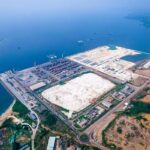
The need to upgrade this road has become urgent due to increased traffic, particularly linked to activities at the Kribi Port, as well as the advanced deterioration of the corridor. Technical studies initially carried out in 2017 therefore need to be updated, which is a priority for the partners involved in the project.
The Minister of Public Works emphasized the importance of allocating funds in the 2026 budget to immediately improve service levels on this strategic road, pending the contracting of companies that will carry out the works. He also proposed several concrete measures, including relocating the Edéa weighbridge—currently about six kilometers away—to facilitate its digitalization and the development of offloading areas.
Another crucial aspect of the project concerns the integration of socio-economic facilities for the benefit of local communities, in line with the Environmental and Social Management Plan. The minister stressed the need to maintain the current alignment of the road while considering lane duplication between Edéa and Douala, as well as the construction of a second bridge over the Dibamba River. These improvements are intended to support regional development and ensure efficient and safe traffic flow.
The upcoming works are part of a broader regional cooperation framework. Several financial partners, including the World Bank, the Islamic Development Bank, and the European Union, have already expressed interest in supporting the Government of Cameroon in expanding infrastructure under the Douala–Bangui Corridor. This corridor, which includes the Yaoundé–Douala, Yaoundé–Bonis, and Bonis–Bertoua–Garoua-Boulaï sections, is essential for boosting economic exchanges in the region.
As traffic on this artery continues to grow, expectations are high regarding the positive impact of the works on the national economy. Local stakeholders and road users hope that this rehabilitation will provide a lasting solution to the area’s transport and logistics challenges. The urgency of the situation calls for swift and effective action, both technically and financially, to ensure a functional future for exchanges between Yaoundé and Douala.
Raphael Mforlem
À propos de l'auteur



 Raphael Mforlem