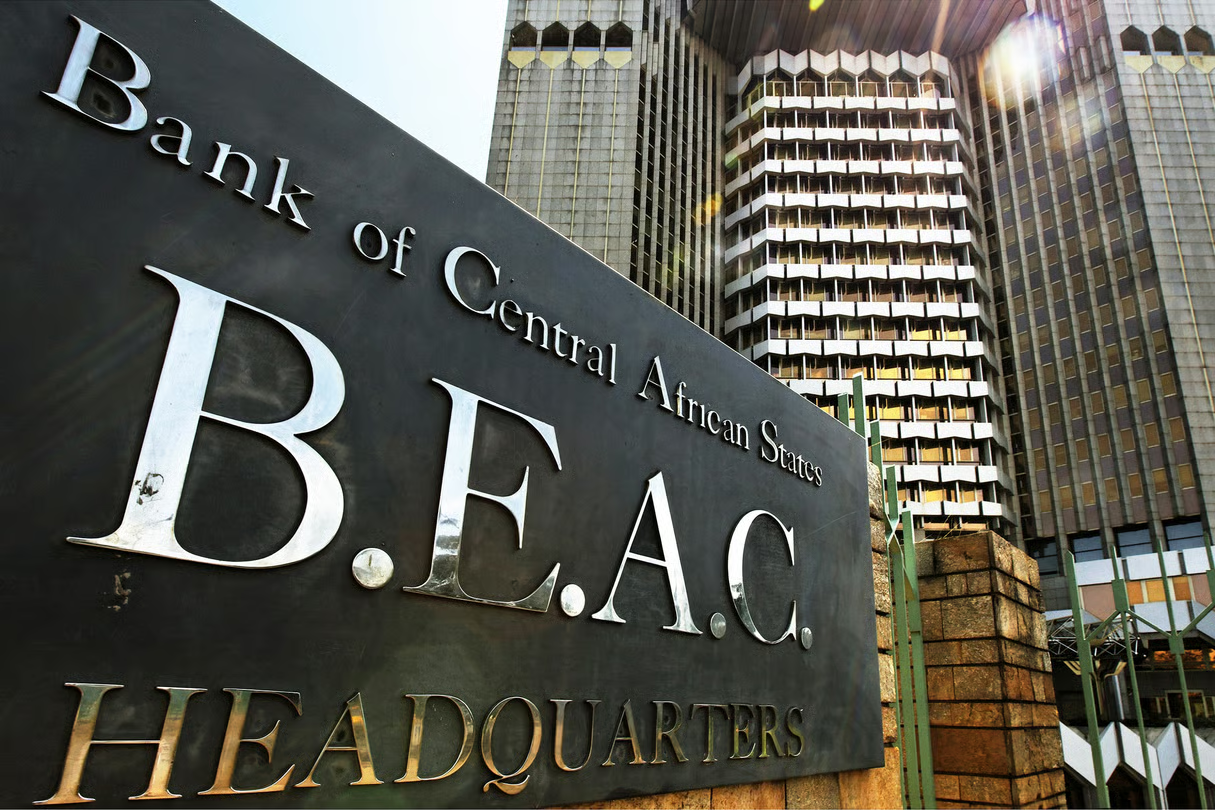
CENTRAL AFRICA : COBAC Shuts Down 70 Microfinance Institutions in 2024 to Clean Up the Sector
 La voix des entreprises
(LVDE) – The decision to close these microfinance institutions, taken by the Central African Banking Commission (COBAC) in 2024, highlights the governance and solvency challenges facing this sector, which is essential to financial inclusion.
The year 2024 will be marked by a major intervention by the Central African Banking Commission (COBAC), which decided to withdraw the licenses of 70 microfinance institutions. This decision reflects an intensive clean-up effort in an industry already weakened by management and compliance issues. The license withdrawals stem from serious shortcomings, particularly in management practices and compliance with prudential standards, aimed at protecting customers while strengthening the financial system.
In-depth inspections revealed recurring deficiencies across several microfinance institutions. These include inadequate staffing, the absence of formalized processes, weaknesses in accounting practices, and the use of outdated information systems. Some institutions also showed liquidity ratios below the minimum required levels, along with irregularities related to minimum capital requirements. These shortcomings prompted COBAC to take strict measures, underscoring the need to retain only institutions with the capacity to manage risks effectively.
Despite these difficulties, the microfinance landscape shows signs of resilience. Some institutions continue to post strong activity, highlighting the sector’s crucial role in financial inclusion across the continent. Public deposits remain significant, and communities’ financing needs have not diminished. Institutions that comply with regulations continue to operate within a strengthened framework, which bodes well for the sector’s future.
COBAC emphasizes the need to strengthen governance and establish regular oversight to ensure the sector’s long-term stability. Measures taken so far demonstrate a clear commitment to improving the quality of microfinance operations. The tightening of prudential rules illustrates a comprehensive strategy to minimize systemic risks, paving the way for more robust networks.
While the sector clean-up may have immediate effects on market structure, it also creates the necessary conditions for stronger long-term consolidation. Monetary authorities are considering supporting this transition to ensure the sustainability of microfinance institutions and their contribution to the regional economy. By fostering a more secure and structured environment, COBAC hopes to revitalize the sector while strengthening the confidence of stakeholders and clients alike.
Thus, although challenges remain, the reforms undertaken by COBAC are essential to giving microfinance in Central Africa a new lease on life. With a clear vision and decisive action, the sector could emerge from this clean-up phase, promoting more effective and accessible financial inclusion for all.
Tressy Chouente
À propos de l'auteur








 Raphael Mforlem