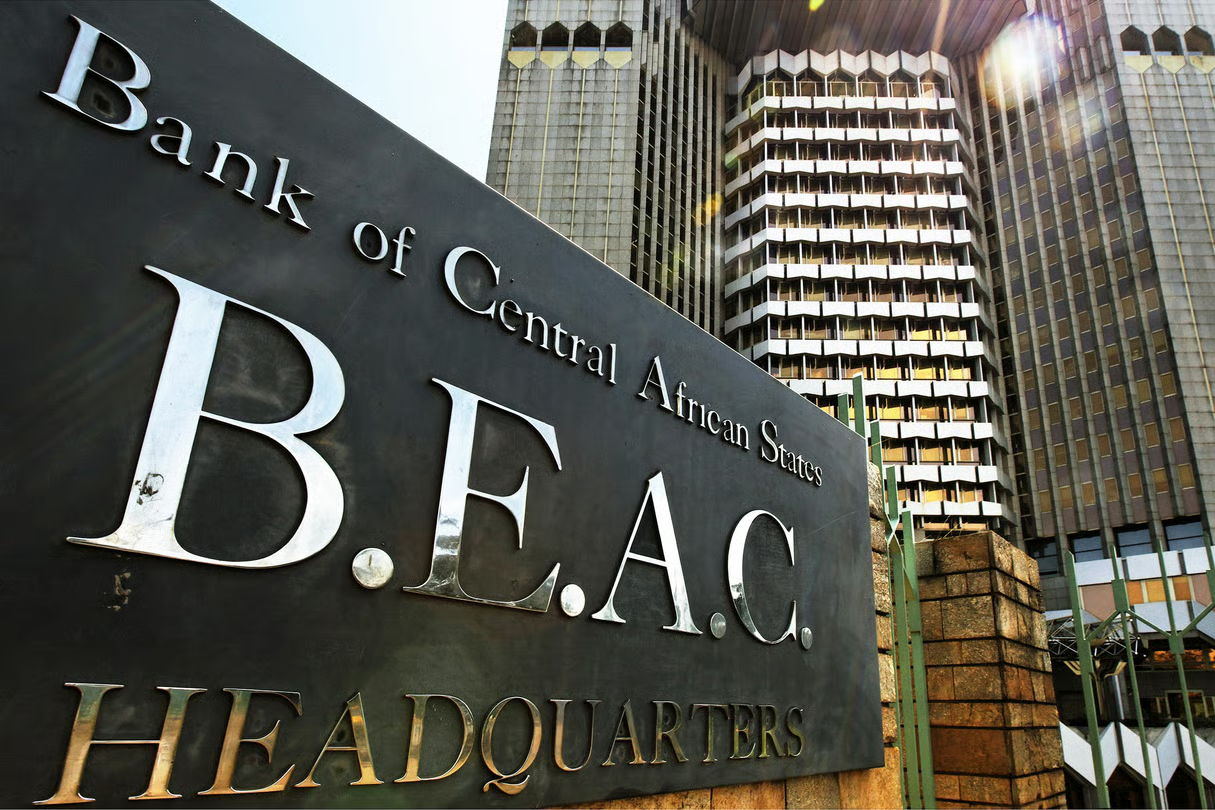
CENTRAL AFRICA : Banks Post CFA 450 Billion in Profits in 2024
 La voix des entreprises
(LVDE) – The results achieved by the CEMAC banking sector, published by the Central African Banking Commission (COBAC), reflect a solid growth momentum while also highlighting the challenges facing the financial system.
In 2024, the banking sector of the Economic and Monetary Community of Central Africa (CEMAC) recorded impressive performances, according to the latest COBAC report. The aggregated balance sheet of credit institutions in the region reached CFA 24,967 billion, representing an 11.5% increase compared to the previous year. This figure illustrates the continued expansion of banking activities in a region striving for economic stability.
This growth was supported by an increase in customer deposits, which stood at CFA 17,995 billion, up by 8.2%. By contrast, the growth of gross credit extended to the economy remained more moderate, amounting to CFA 12,501 billion, with an increase of 6.5%. This situation highlights a persistent imbalance between savings mobilization and loan disbursement, revealing a marked caution in banking intermediation, particularly in a regionally uncertain macroeconomic environment.
In terms of profitability, CEMAC banks stood out with a combined net profit of CFA 449.8 billion, up by 12.6%. This rise in earnings demonstrates the sector’s ability to generate profits, notably through efficient treasury operations and securities transactions, even as the economic climate continues to present structural risks.
However, COBAC also points to persistent vulnerabilities within the banking system. Non-performing loans reached CFA 2,024 billion, reflecting an increase of 7.7% and a worrying ratio of 16.2%. This level raises concerns about the quality of banks’ loan portfolios and their ability to sustainably support financing for the real economy in the CEMAC zone.
In light of these results, banking authorities are urging institutions to strengthen risk management and improve asset quality. The need for better banking intermediation appears crucial to ensuring more balanced economic development in the region.
Overall, these results reflect a positive momentum in Central Africa’s banking sector, but they call for heightened vigilance regarding risk management and the quality of credit granted. The road toward a more robust financial system in CEMAC remains challenging, yet the performances recorded in 2024 point to significant potential for improvement in the years ahead. Tressy Chouente
À propos de l'auteur







 Raphael Mforlem