DIGITAL SOVEREIGNTY : Camtel Unveils the Performance of Its Zamengoé Datacenter to Businesses and Government Agencies

 La voix des entreprises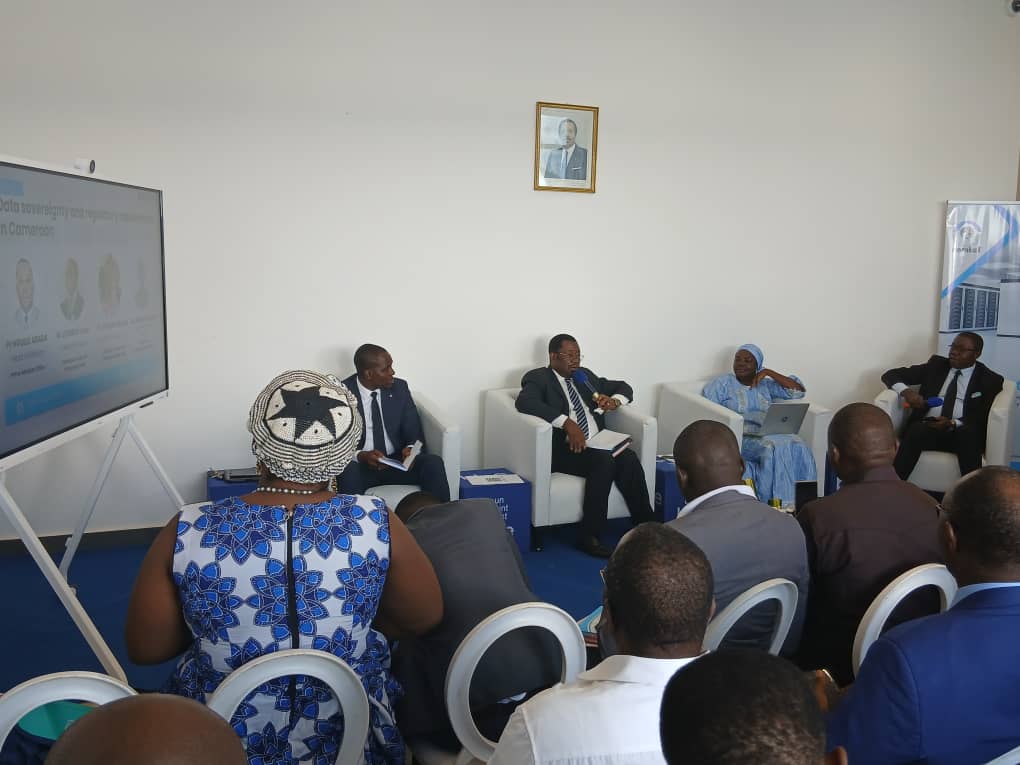
(LVDE) – On 10 December 2025, within the high-tech halls of the Zamengoé Datacenter, Camtel launched the “Camtel Cloud Days,” a workshop dedicated to the challenges of local datacenters, data sovereignty and regulatory compliance. Stakeholders from both the public and private sectors, as well as actors from the digital ecosystem, attended the event to learn how the state-owned telecom operator aims to position Cameroon as a secure hub for data processing and storage.
Yesterday, 10 December 2025, the Zamengoé Datacenter, located about thirty kilometers from Yaoundé, took on the appearance of a strategic crossroads. From the opening of the “Camtel Cloud Days,” the ultra-modern facility—designed to centralize, process, store, and redistribute very large volumes of data—became a gathering point for representatives of public administrations, major companies, and national and international digital organizations. Physical infrastructures, redundant servers, networks and cooling systems were presented as the essential foundation of digital sovereignty, at a time when the growing use of digital services demands greater security, availability, and compliance with existing standards.
The opening day was marked by an inaugural presentation from Dr. Anye Divine, an international telecommunications consultant, who highlighted the challenges related to the protection of critical infrastructures and the secure management of data in an environment where offshore storage exposes information to foreign legislation that often conflicts with national rules. In a context where Camtel generates more than 33.7 billion CFA francs in revenue from its data transport activities—an increase of over 17% in 2024 compared to 2023—emphasis was placed on strengthening local processing and storage capacities to better control the country’s digital flows.
At the heart of the discussions, regulatory issues occupied a central place. Speakers recalled that the law on the protection of personal data imposes strict requirements regarding consent, local storage, and the responsibilities of data handlers. Camtel is thus positioning itself as an infrastructure provider ready to support government agencies and businesses in meeting compliance obligations, while contributing to the development of a resilient national digital ecosystem.

The day continued with a guided tour of the datacenter’s facilities, giving participants a rare opportunity to appreciate the site’s robustness and modularity. From the impressive alignment of server racks to the climate-control rooms, the entire operational chain was showcased, symbolizing Camtel’s ambition to make Cameroon a trusted digital space in Central Africa.
Following this event, other recent initiatives in the sector highlight the country’s drive toward digital autonomy: meetings such as the National DNS Forum and ongoing work on DNSSEC validation aim to strengthen Internet infrastructure security, with operators like Camtel now securing more than 73% of the country’s domains—progressing toward the national target of 98% by 2026.
The workshop, which runs until December 12, is part of Camtel’s broader strategy: consolidating Cameroon’s digital sovereignty, promoting its datacenter as a major technological asset, and strengthening collaboration within the national digital ecosystem. Ultimately, the emphasis placed on local data processing infrastructures reflects a shared commitment to making the country a reliable anchor for critical applications used by government agencies and economic players, in a world where data has become a strategic asset and a national security concern.
Raphael Mforlem
À propos de l'auteur






 Raphael Mforlem