BUSINESS FINANCING : IFC Plans to Mobilize USD 500 Million for High-Potential Cameroonian SMEs
 La voix des entreprises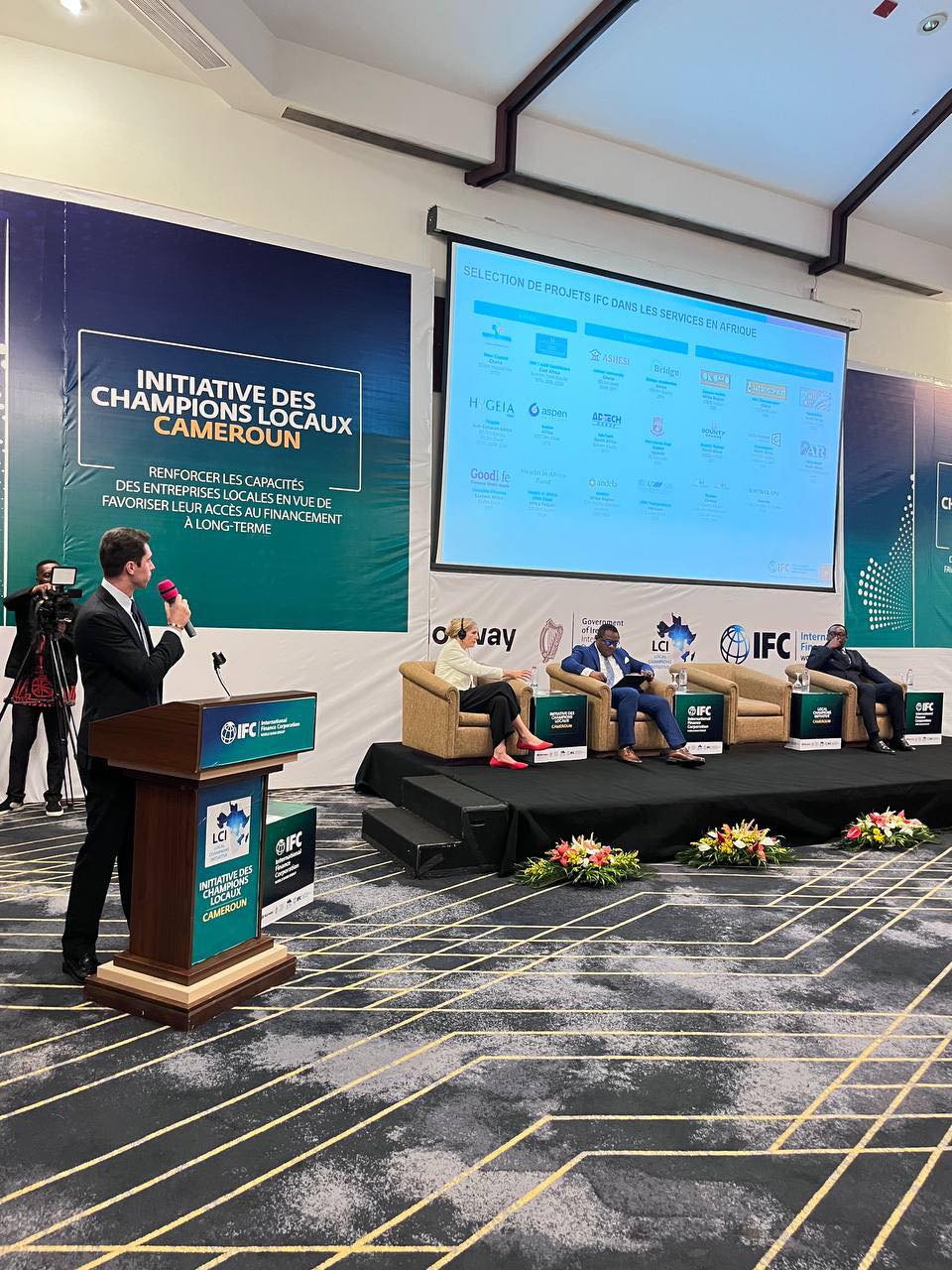
(LVDE) – The initiative known as “Local Champions – Cameroon,” aimed at mobilizing up to USD 500 million (XAF 282.4 billion) to improve access to financing for high-potential enterprises, was launched from December 2 to 4, 2025, in Yaoundé by the International Finance Corporation (IFC).
Under the domes of a hotel in the capital this early December, around thirty economic actors—from agribusiness, manufacturing, digital services, and logistics—answered IFC’s call. Over three days, a capacity-building seminar was dedicated to “Local Champions – Cameroon,” a program designed to equip SMEs with the tools needed for long-term investment. The institution’s message is clear: identify high-growth companies and prepare them to access financing—either through debt or equity—while strengthening their governance practices.
According to IFC’s Country Representative, the ambition is to turn “opportunities into tangible financing.” The stated plan: mobilize up to USD 500 million to support projects deemed viable—whether in terms of supply chain performance, competitive impact, or environmental sustainability.
In this regard, 31 companies, selected from an initial pool of 200, have been retained for the support program. Among them are a dairy agribusiness, a pharmaceutical operator, an industrial chemicals firm, and a recycling promoter. These business leaders share a common objective: to enter new markets—national or regional—and to receive technical and financial assistance to structure and expand their operations. (Statements from participants reported in the media)
The Cameroonian initiative continues IFC’s pilot program launched in 2018 across several African countries—including Burkina Faso, Niger, Chad, Guinea, Togo, and Liberia. For IFC officials, Cameroon represents a significant milestone: it is the first country in the region to host this expanded version of the initiative.
Moreover, the program aligns with a broader context of IFC’s rising involvement in the country. As early as spring 2025, the institution announced plans to nearly double its commitments in Cameroon over the next three years, with the goal of surpassing XAF 300 billion in investments—equivalent to the USD 500 million targeted.
Several recent operations illustrate this momentum: a partnership with a Cameroonian bank to unlock USD 60 million for SMEs, as well as a loan to a local agrifood processing company to boost domestic production—tangible signs that IFC is moving from intentions to concrete action.
For the Cameroonian business community, the announcement sparks renewed hope. In a context often described as challenging for access to credit—particularly for family-owned SMEs or those lacking collateral—IFC’s engagement could mark a turning point in the structuring of the national private sector. Still, observers remain cautious: everything will depend on the ability of the selected enterprises to meet the donor’s criteria for viability, governance, and sustainability.
Ultimately, the “Local Champions – Cameroon” initiative reflects IFC’s determination to invest in the country’s human and productive capital, foster the emergence of structuring economic actors, and contribute—through direct support to SMEs—to economic diversification and sustainable development.
Raphael Mforlem
À propos de l'auteur






 Raphael Mforlem