AUTOMATED ROAD TOLL PROJECT : Tollcam takes the Cameroonian State to court for wrongful termination of the PPP contract
 La voix des entreprises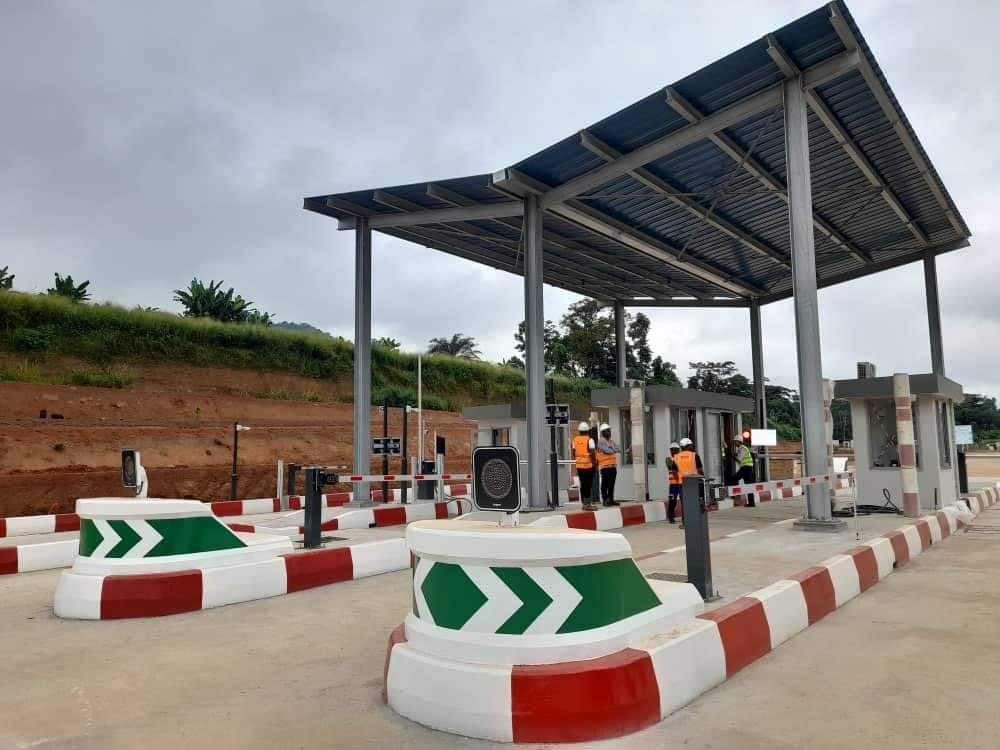
(LVDE) – According to the 2024 report of the Chamber of Accounts, a major dispute has erupted between the Cameroonian government and the company Tollcam Partenariat SAS over the road toll automation project. The situation has led Tollcam to claim XAF 30 billion in compensation for damages resulting from the unilateral termination of the Public-Private Partnership (PPP) contract that bound the two parties.
Tensions surrounding Cameroon’s toll automation project have escalated sharply. Tollcam Partenariat SAS, a joint venture formed by French groups Fayat and Egis, has decided to take the matter before the International Court of Arbitration in Paris. Following the unexpected termination of their PPP contract—officially notified on 2 February 2024 by the Minister of Public Works, Emmanuel Nganou Djoumessi—Tollcam is now demanding XAF 30 billion from the State.
The core issue lies in the transformation of the initial partnership into a standard public contract, a change that has raised serious concerns. By removing Tollcam’s responsibility for managing and maintaining the toll stations and limiting its role to designing and constructing the infrastructure, the government has drastically altered the terms of the agreement. This shift calls into question the transparency and integrity of recent decisions, highlighting persistent difficulties in public–private collaboration in Cameroon—a sector often marked by uncertainty.
It is worth recalling that the toll automation project was declared eligible for PPP contracts in 2016 after approval by the competent bodies, including the Support Council for the Implementation of Partnership Contracts (Carpa) and the Ministry of Finance. However, the escalation of the dispute now casts doubt on the validity of past commitments, especially since seven of the fourteen toll stations had already been built, with commissioning initially planned for September 2023.
👉🏾 Stay informed in real time on our WhatsApp channel
The financial stakes further complicate the situation. The original contract called for an investment of XAF 42 billion, with cumulative payments reaching up to XAF 195 billion over 18 years. According to a document from the Ministry of Public Works, the Public Treasury could have made a net profit estimated at XAF 437.6 billion by the end of the concession period, excluding taxes. This raises questions about the government’s decision to abandon a seemingly advantageous system.
Another major challenge in implementing automated tolls is revenue traceability. Toll collection systems must ensure real-time transparency of financial flows, allowing the Ministry of Finance to monitor revenues instantly. The absence of such monitoring mechanisms could undermine the trust of key stakeholders.
In this context, the situation is becoming even more worrying for Tollcam. Recent information indicates that Tikehau, the main shareholder of Egis, is considering divesting some of its African operations, which could weaken Egis’s capacity to manage complex projects such as Cameroon’s toll system. This shift in shareholder structure raises concerns about the future of the project within an increasingly uncertain legal environment.
Overall, the difficulties in implementing PPPs in Cameroon highlight the significant obstacles faced by private companies. While an attempt at amicable settlement is still underway, the outcome of the dispute remains unclear, leaving a climate of uncertainty hovering over the future of essential road infrastructure for the country’s development.
The toll automation project illustrates the profound challenges of collaboration between the Cameroonian government and its private partners. Although automated tolls are presented as a necessary modernization step, their success will depend on the ability of all parties to navigate a complex legal and financial environment where trust is critical.
Esther Grace
À propos de l'auteur






 Raphael Mforlem