YOYO/YOLANDA OIL PROJECT : Cameroon and Equatorial Guinea approve pipeline construction
 La voix des entreprises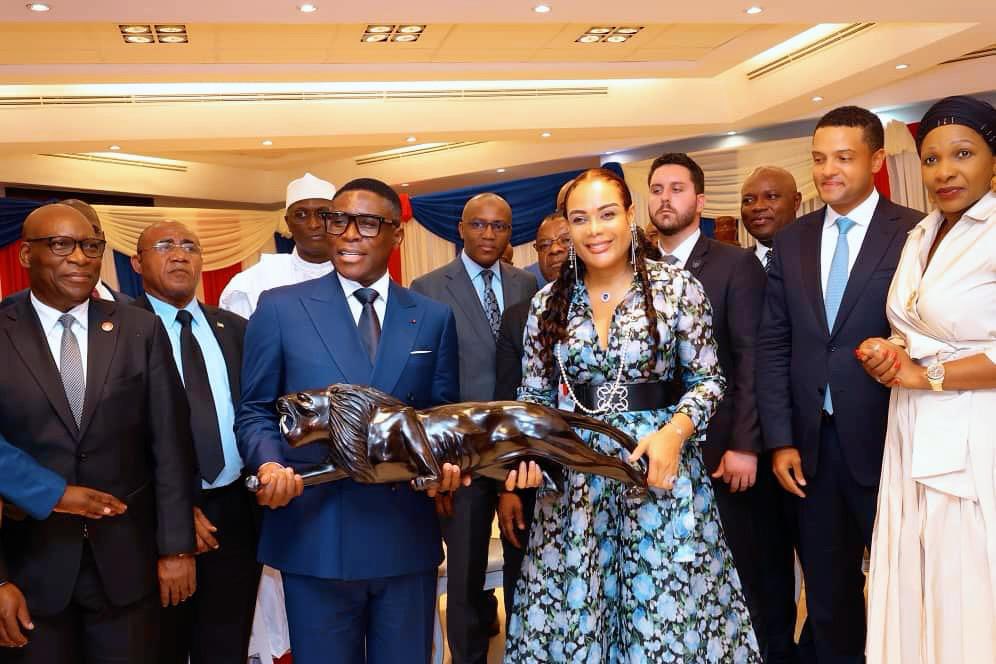
(LVDE) – On 19 November 2025, a strategic meeting held at the headquarters of the National Hydrocarbons Corporation (SNH) brought together Cameroonian and Equatoguinean authorities to approve the construction of two pipelines for the cross-border Yoyo-Yolanda gas field, a project with major economic potential.
A high-level meeting took place on 19 November 2025 at the Yaoundé headquarters of the National Hydrocarbons Corporation (SNH). Nathalie Moudiki, representing the General Manager, welcomed Teodoro Nguema Obiang Mangue, Vice President of the Republic of Equatorial Guinea. The meeting also gathered key figures, including Equatorial Guinea’s Minister of State for Foreign Affairs, International Cooperation and the Diaspora, as well as the Minister of Hydrocarbons and Mining Development. Its objective was to assess progress on the Yoyo/Yolanda oil and gas project.
This project, which is drawing strong interest from both nations, concerns the development of a cross-border gas field with reserves estimated at approximately 2.5 trillion cubic feet. During the meeting, the main guidelines for the development of this strategic asset were established, with a particular focus on constructing two export pipelines, to be complemented by separate processing facilities in Bipaga, Cameroon, and Punta Europa, Equatorial Guinea.
The Yoyo/Yolanda project represents a major step forward for the energy sectors of both countries, offering prospects for economic growth and diversification of energy resources. It is also a key component of regional energy integration. The establishment of these transport and processing infrastructures is essential to maximise the use of gas resources and strengthen cooperation between Cameroon and Equatorial Guinea.
Participants also discussed the ambitions and prospects of Tradex Equatorial Guinea, which plays a central role in the implementation of the project. This partnership between the two countries could redefine the regional energy landscape by increasing production and facilitating access to international markets.
With this phase now validated, the Yoyo/Yolanda project is expected to accelerate the development of the infrastructures needed for the exploitation of gas resources, thus contributing to the energy security of both nations. Going forward, the governments must work hand in hand to finalise the technical and regulatory aspects required to achieve this shared ambition.
This collaboration, initiated through constructive dialogue between Yaoundé and Malabo, signals a promising future for the oil and gas sector in Central Africa, strengthening bilateral relations and enhancing both countries’ strategic position on the continental energy scene.
Raphael Mforlem
À propos de l'auteur




 Raphael Mforlem