YOUTH ENTREPRENEURSHIP : AfDB and Japan launch the Africa-Asia platform

 La voix des entreprises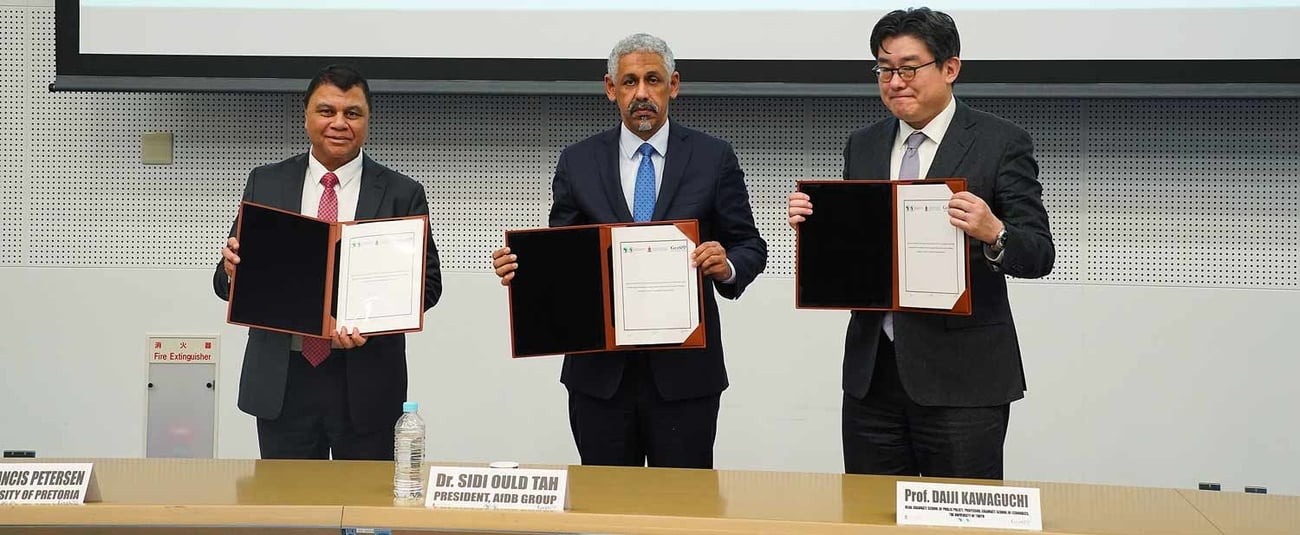
(LVDE) – As part of a joint initiative, the African Development Bank (AfDB) launched the Africa-Asia Platform (A-A) on November 12. This ambitious project aims to facilitate the transfer of knowledge and innovation between Africa and Asia, with the goal of boosting youth entrepreneurship across both continents.
The launch of the Africa-Asia Platform, organized by the African Development Bank (AfDB) in collaboration with Japanese institutions, marks a significant milestone in promoting the exchange of know-how between Africa and Asia. The ceremony, held at the United Nations University in Tokyo, brought together key figures such as Sidi Ould Tah, President of the AfDB Group, Francis Petersen, Vice-Chancellor of the University of Pretoria, and Teruo Fujii, President of the University of Tokyo. This event reflects a commitment to strengthening ties between the two continents by leveraging innovation to support development.
Supported by the Policy and Human Resource Development Grant (Phrdg), the Africa-Asia Platform is built around several strategic pillars. These include fostering knowledge partnerships, developing public-private dialogue to support initiatives in Africa, and strengthening research capacity within academic institutions. Creating synergies between universities is essential to achieving successful knowledge transfer.
This initiative follows the Ninth Tokyo International Conference on African Development (Ticad9), held in Yokohama in August 2025, where emphasis was placed on the importance of co-creating innovative solutions. The AfDB and its partners expressed their ambition to use this platform to establish a new collaborative framework, ensuring that young entrepreneurs benefit from the opportunities offered.
Ould Tah highlighted the importance of this effort, stating that “establishing links between the African and Asian continents is vital to the success of the platform. By placing young people at the heart of innovation and entrepreneurship, we help develop an attractive African market capable of generating jobs, mitigating migration issues, and ensuring a secure future.” The focus on youth as drivers of the economy underscores the AfDB’s commitment to investing in the next generation of economic leaders.
Francis Petersen added that despite the geographical and institutional distances to be bridged, universities are pivotal institutions for closing gaps. “Their capacity to produce interdisciplinary knowledge and build networks will strengthen exchanges between the two continents. By joining forces, we can co-create solutions that address contemporary challenges,” he explained.
For his part, Teruo Fujii highlighted the potential of this initiative to foster connections between researchers, policymakers, and entrepreneurs. “The platform will serve as a meeting point for joint research projects and mutual learning opportunities, thereby enriching the human capital of both continents,” he said.
The Africa-Asia Platform builds on existing AfDB innovation projects, such as Phase 2 of the Pan-African University and the Ennova project. The latter is an innovation platform powered by artificial intelligence that provides entrepreneurs with access to a wide range of resources, from market studies to financing. Through these initiatives, the AfDB hopes to strengthen the African entrepreneurial ecosystem and support sustainable development.
Partner organizations—including the University of Pretoria and the Graduate School of Public Policy at the University of Tokyo—have reaffirmed their commitment to working together to achieve the platform’s objectives. This collective engagement demonstrates a genuine willingness to invest in the future of young people and promote a climate of innovation on the African continent. By combining their strengths, these institutions aim to transform the global entrepreneurial landscape, positioning Africa as a key player on the international stage. This initiative promises to energize youth entrepreneurship and open new perspectives for future generations.
Raphael Mforlem
À propos de l'auteur








 Raphael Mforlem