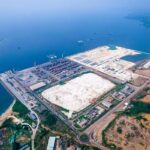
FUTURE MINERAL TERMINAL AT KRIBI PORT : A major opportunity for Cameroon’s mining sector and economy
 La voix des entreprises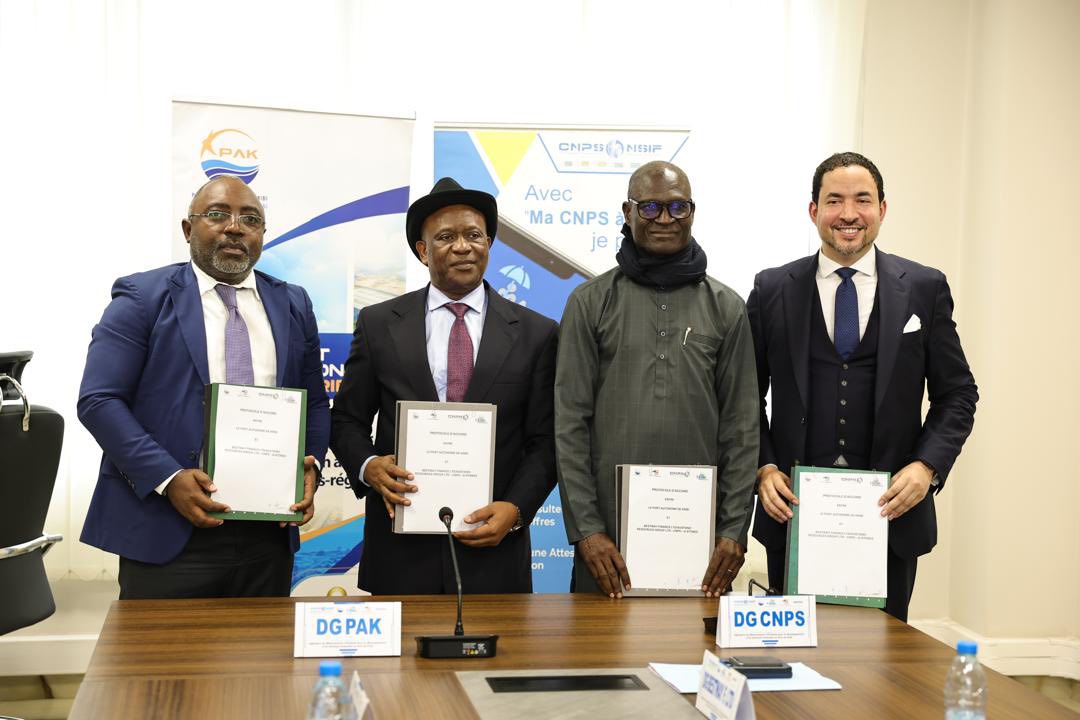
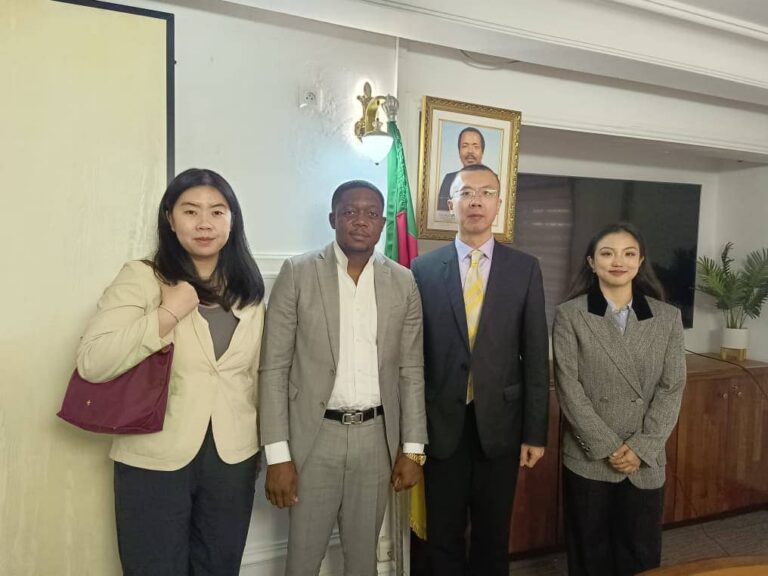
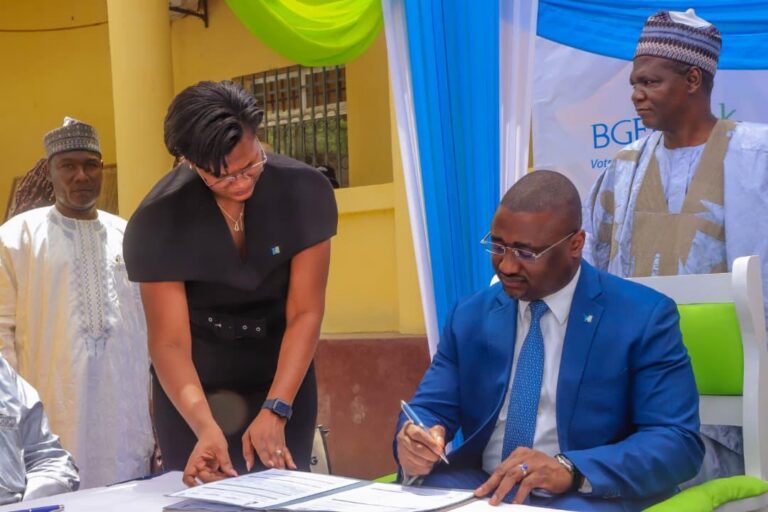
Signing of the Memorandum of Understanding between PAK, CNPS, and the Bestway/Austsino and G-Stones Consortium
(LVDE) – On November 4, 2025, a new chapter began for the Port of Kribi with the signing of a Memorandum of Understanding between the Autonomous Port Authority, the National Social Insurance Fund (CNPS), and the Bestway/Austsino–G-Stones consortium, paving the way for the construction of a mineral terminal. This ambitious project could transform Cameroon’s mining industry.
The conference hall of the CNPS headquarters buzzed with excitement on November 4, 2025. Representatives from the Kribi Port Authority (PAK), the National Social Insurance Fund (CNPS), and the Bestway/Austsino–G-Stones consortium sealed a strategic partnership for the construction of a mineral terminal on the port site. The ceremony, marked by handshakes and camera flashes, represents a potential turning point for Cameroon’s mining and trade sectors.
The scale of the project is impressive : the future terminal will be capable of handling up to 125 million tonnes of minerals per year and will cover an area of 330 hectares. Equipped with state-of-the-art port technology, this modern infrastructure aims to enhance local mineral processing and strengthen the country’s competitiveness on the global stage.
According to Patrice Melom, General Manager of PAK, the project reflects Cameroon’s ambition to secure a leading position in the mining industry. “Our goal is not only to develop infrastructure but also to promote local resource transformation — a crucial step for our national economy,” he stated during the ceremony.
Alain Noël Olivier Mekulu Mvondo Akame, Director General of CNPS, also highlighted the strategic importance of the initiative. He described it as a sustainable development project capable of generating thousands of jobs and driving long-term growth.
The terminal’s operational capacities promise to be remarkable. Designed with a focus on efficiency and sustainability, the technologies to be implemented will help reduce environmental impact while maximizing logistical performance. The project is also expected to attract new foreign investments and stimulate economic development in Cameroon’s Littoral region.
The signatories committed to completing the technical, legal, and financial structuring of the project within four to six months — a crucial step to ensure its feasibility and timely execution. At the same time, environmental impact assessments and public consultations will be conducted to ensure the terminal’s smooth integration into its surroundings.
This mineral terminal forms part of Cameroon’s broader efforts to harness its rich mining potential, which includes significant deposits of iron, bauxite, gold, and diamonds. As global demand for these resources continues to rise, projects like this are key to positioning the country as a major player in the mining sector.
Beyond its economic significance, the initiative also aims to foster the creation of genuine local value chains. By strengthening domestic mineral processing capacities, Cameroon stands to increase fiscal revenues while promoting more inclusive development.
T.C.
À propos de l'auteur





 Raphael Mforlem