FOREIGN TRADE : CNCC and GUCE join forces to accelerate the digitalization process

 La voix des entreprises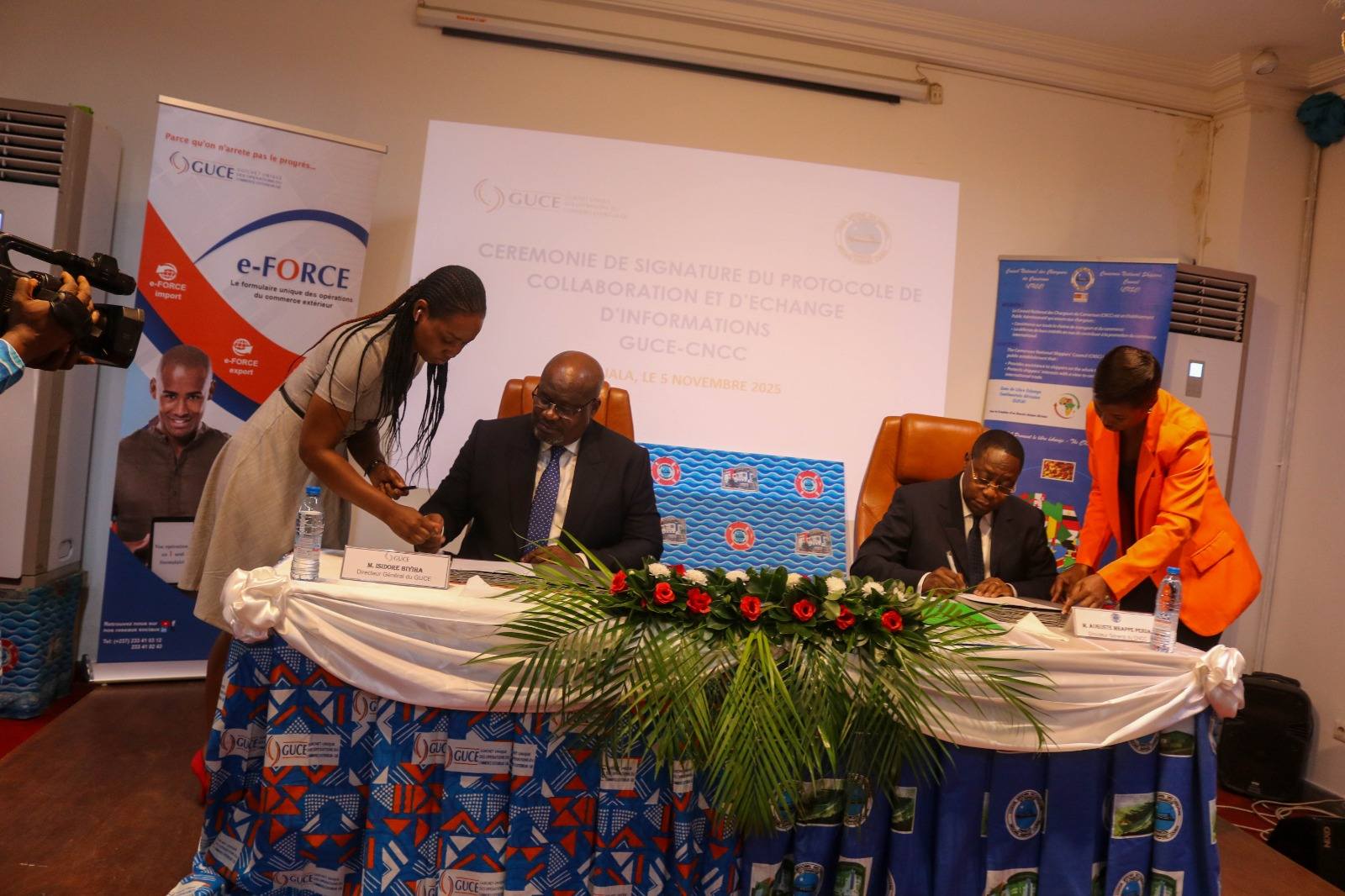
(LVDE) – On November 5, 2025, the National Shippers’ Council of Cameroon (CNCC) and the Single Window for Foreign Trade Operations (GUCE) signed a memorandum of understanding in Douala to modernize and digitalize trade operations. This agreement marks a major step forward for Cameroon’s foreign trade.
Cameroon’s trade landscape has entered a new phase of modernization and digitalization with the signing of this partnership between CNCC and GUCE. The agreement, signed by Auguste Mbappé Penda, Director General of CNCC, and Isidore Biyiha, Director General of GUCE, aims to enhance the efficiency of trade operations through better integration of digital processes.
This partnership is based on joint efforts to train, raise awareness, and communicate with logistics chain stakeholders. Training sessions will focus on the adoption of dematerialized procedures—essential for ensuring a smooth transition to full digital operations. The agreement also includes technical assistance and monitoring tools to support operators throughout this transformation.
Since 2017, Cameroon has been actively pursuing digitalization through initiatives such as the rollout of the electronic single form for foreign trade operations (e-Force). This framework has strengthened information exchange between GUCE and CNCC, facilitating the transmission of documents and Electronic Cargo Tracking Notes (BESC). To date, more than 2 million files and BESCs have been exchanged, significantly improving trade security. Isidore Biyiha emphasized that this collaboration is vital to ensuring the safety and transparency of transactions.
The signed convention represents a major milestone in Cameroon’s national program for digitalizing foreign trade procedures. As GUCE strengthens its security systems with new protocols and stricter authentication measures, the agreement is expected to further streamline trade operations while securing state tax and customs revenues.
To date, GUCE has digitalized more than 35 procedures. Between 2012 and 2023, the platform facilitated the collection of 8,210 billion CFA francs in customs duties and 98 billion CFA francs in taxes. Auguste Mbappé Penda underscored the shared vision of both institutions: to make trade flows through ports, airports, and border posts more seamless, thereby improving Cameroon’s international competitiveness.
The drive for interoperability between the e-Force and BESC systems is a key component of this modernization effort. It seeks to reduce transaction costs, enhance cargo traceability, and minimize fraud risks. The project also emphasizes maintaining a high level of cybersecurity to protect exchanged data. Moreover, continuous support for users will be essential to ensure that the technical benefits of digitalization translate into greater competitiveness along Cameroon’s trade corridors.
Esther Grace
À propos de l'auteur







 Anatole Bidias
 Raphael Mforlem