EQUATORIAL GUINEA : AfDB provides €58 million to promote youth employment
 La voix des entreprises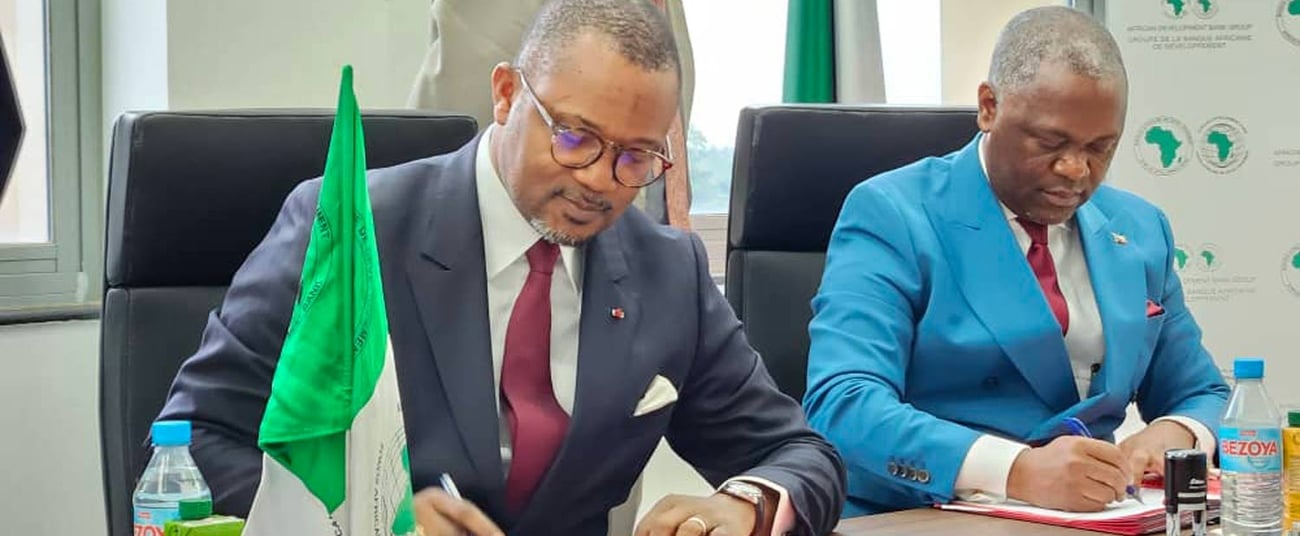
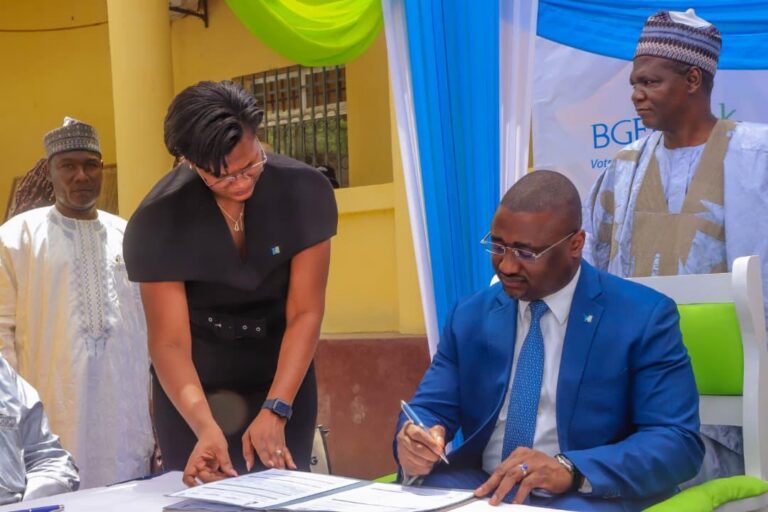
Léandre Bassolé, Director General of the African Development Bank Group for Central Africa (left), and Pedro Abeso Obiang Eyang, Deputy Minister of Finance and Budget of Equatorial Guinea, during the signing ceremony of the Human Capital Development Project financing agreement in Bata on October 30, 2025.
(LVDE) – On October 30, 2025, the African Development Bank (AfDB) and the Republic of Equatorial Guinea signed a €58.61 million financing agreement to support the first phase of the Human Capital Development Project. The program aims to enhance young people’s access to employment through tailored training and entrepreneurship promotion.
A major milestone was reached in Bata on October 30, 2025, for Equatorial Guinea’s youth. The African Development Bank (AfDB) signed a €58.61 million financing agreement with the government of Equatorial Guinea, marking its return to the human development sector after a decade-long hiatus. The agreement—signed by Léandre Bassolé, AfDB Director General for Central Africa, and Pedro Abeso Obiang Eyang, Deputy Minister of Finance—underscores a strong commitment to youth economic and social inclusion.
The project, known as PARCH 1, seeks to improve the quality of training and broaden access to employment for young men and women by fostering a vibrant, private sector–driven economy. In its first phase, the project will train nearly 2,000 young people—45% of whom will be women—and create about 4,500 jobs. In addition, 500 youth- and women-led enterprises are expected to emerge, helping diversify the national economy.
As part of this ambitious initiative, two polytechnic institutes will be built in Mongomo and Luba, meeting international standards and incorporating climate sustainability principles. These institutions will play a crucial role in training the skilled workforce needed to maintain and operate the country’s infrastructure built over the past decades. “By nurturing a skilled and entrepreneurial youth, Equatorial Guinea is laying the foundation for shared prosperity—where knowledge becomes the nation’s most valuable resource,” said Mr. Bassolé.
The AfDB’s financing represents a strategic investment in the future of Equatorial Guinea’s youth. Mr. Obiang Eyang emphasized the importance of developing young people’s skills in high-potential sectors, noting that such efforts would underpin a diversified and resilient economy. “This financing is key to creating lasting opportunities for all Equatoguineans,” he stated.
The total project cost amounts to €73.27 million, with the Equatorial Guinean government contributing €14.65 million. This public–private partnership highlights the shared commitment of both parties to improving youth livelihoods and fostering an environment conducive to entrepreneurship.
As of August 30, 2025, the AfDB Group’s operational portfolio in Equatorial Guinea includes five projects with total net commitments of about €85.6 million. The sectoral distribution of these commitments shows clear priorities: 65% for agriculture (including fisheries), 34% for governance, while ICT and energy account for smaller shares.
By Sorelle Ninguem
À propos de l'auteur



 Raphael Mforlem