AGRO-INDUSTRY : Cameroon Plans to Revolutionize the Cocoa Sector with the Creation of a New Chocolate Factory in 2026

 La voix des entreprises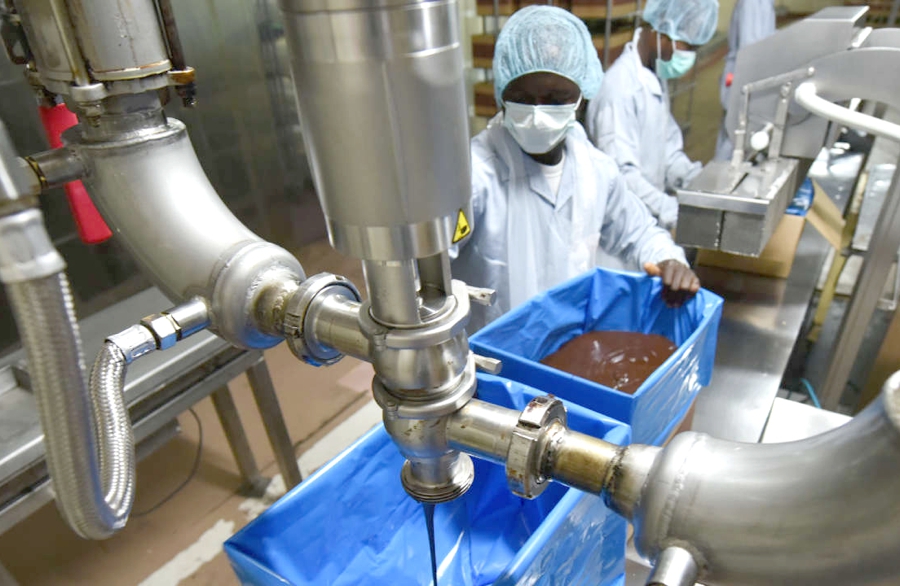
(LVDE) – This factory, representing an investment of nearly one billion CFA francs, will be established in Nkol Melen in January 2026, marking a significant step forward in the transformation of Cameroonian cocoa and the ambition to export premium products.
On September 23, 2025, during a meeting at the Ministry of Trade, French entrepreneur Olivier Bordais announced that his chocolate factory, Chocolat Rouge, will become operational in January 2026 in Nkol Melen, a locality on the outskirts of Obala, in the Centre region. This project, which required a total investment of about €1.5 million (nearly one billion CFA francs), is part of a strategy to promote local value addition to cocoa, an abundant raw material in Cameroon.
The Chocolat Rouge factory aims to produce premium chocolate bars for the international market. Starting in February 2026, the first shipments are expected to be launched. However, the promoter expressed concerns about potential administrative delays in obtaining the documents required to comply with the new European Union Deforestation Regulation (EUDR), which takes effect on January 1, 2026. This regulation seeks to ensure that products marketed in the European market do not contribute to deforestation, a crucial issue for cocoa exporters.
Responding to these concerns, Cameroon’s Minister of Trade, Luc Magloire Mbarga Atangana, assured that measures would be taken to speed up the issuance of compliance documents. In his remarks, he emphasized the importance of this project for the country and his commitment to supporting entrepreneurs in their administrative procedures.
The factory, which will cover an area of 3,000 m², is designed as a model of sustainability. The Minister specified that Chocolat Rouge will adopt a short supply chain model, fostering a collaborative approach that integrates all actors in the cocoa sector. This should not only enhance profitability but also ensure a fair distribution of benefits within local communities.
With an estimated annual cocoa production of about 300,000 tons, Cameroon has enormous potential in the processing sector. However, much of this production is still exported as raw beans, limiting the added value retained domestically. The Chocolat Rouge initiative could therefore help change this dynamic by fostering industrialization in the cocoa sector and allowing local producers to benefit from a more profitable market.
At the same time, this project is part of a broader effort to diversify Cameroon’s economy, traditionally centered on agriculture and natural resource exploitation. By developing industries such as chocolate production, the country aims to create jobs, stimulate the local economy, and improve the living conditions of cocoa producers.
The stakes are therefore multiple : on the one hand, meeting the growing demand for sustainable products on the international market, and on the other, ensuring that local actors benefit from this emerging economy. The Chocolat Rouge chocolate factory could well be the catalyst for a new era in Cameroon’s cocoa sector, linking producers, processors, and consumers in a virtuous economic cycle.
Esther Grace
À propos de l'auteur







 Anatole Bidias
 Raphael Mforlem