COTTON PRODUCTION : AGL Cameroon Reports Over 312,000 Tons Stored in Three Years

 La voix des entreprises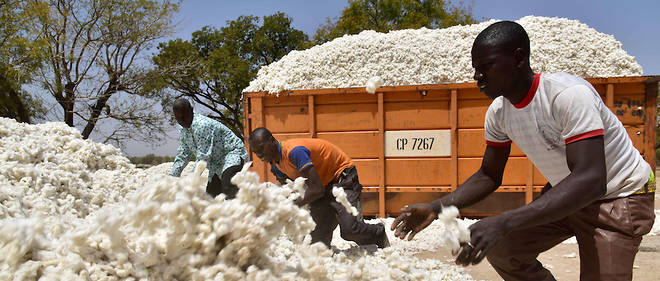
(LVDE) – Between 2023 and 2025, Africa Global Logistics (AGL) stored a total of 312,286 tons of cotton, representing 86.6% of the country’s projected production for 2025, according to the Bank of Central African States.
From September 5 to 7, 2025, logistics operator AGL opened its doors to the press to showcase its storage facilities at the Kribi Logistics Hub (KLH), located in the Kribi industrial and port area. On this occasion, the company announced that it had stored an impressive 312,286 tons of cotton—sourced mainly from Cameroon and Chad—over a three-year period. This massive volume equals 86.6% of the cotton production projected by the Bank of Central African States (BEAC) for 2025.
Storage operations were carried out in AGL warehouses in Douala and Kribi, on behalf of Cameroon’s Cotton Development Corporation (Sodecoton) and Chad’s Cotton Company (Coton Tchad). Of the volumes stored, 219,072 tons belonged to Sodecoton, while 93,214 tons were destined for Coton Tchad.
In 2024, the volume of cotton stored peaked at 123,852 tons, marking a 25.15% increase compared to previous years. This growth was driven mainly by activities in Kribi for Sodecoton and in Douala for Coton Tchad. However, in 2025, a sharp decline was observed, with only 89,475 tons stored—a 38.42% drop. This decrease was attributed to flooding in production areas and delays in fertilizer deliveries.
AGL emphasized that the rapid expansion of KLH, which accounted for 40% of cotton exports in 2024, is based on well-coordinated logistics synergies. This not only helps control costs but also ensures high-quality services for clients at the Port of Kribi. The platform is currently undergoing expansion, supported by the development of the second container terminal managed by Kribi Conteneurs Terminal (KCT), in which AGL is a key shareholder.
Honorine Magne, Director of Development at KLH, stated: “This new multimodal platform is designed to meet the specific growth needs of the sub-region’s economy.” The cotton warehouses in Kribi and Douala serve as a strategic asset for AGL, strengthening Cameroon’s position in the cotton sector.
In 2023, the country exported 127,506 tons of cotton fiber, generating revenues of CFAF 147.9 billion, according to the National Institute of Statistics (INS). Despite a 14.7% drop in exports and a 4.8% decline in related revenues, raw cotton remains one of Cameroon’s top five export products, accounting for 4.9% of market share.
This underscores the crucial importance of cotton in Cameroon’s economy and the vital role of logistics infrastructure such as KLH in optimizing the export chain. As the sector continues to grow, AGL appears well-positioned to play a central role in facilitating international trade, ensuring that Cameroonian cotton remains competitive on the global market. Future developments in logistics and production will be key to strengthening this position.
Esther Grace
À propos de l'auteur






 Anatole Bidias
 Raphael Mforlem